Dublin to Cork is 257km. The average modern EV sold in Ireland has a WLTP range of somewhere between 350km and 500km. On paper, you don't need to stop. In reality, on a cold January day on the M8 with the heating running and cruise control set to 120km/h, you'll use meaningfully more energy than that WLTP figure implies — and how much more depends on your car, the outside temperature, and a handful of decisions you make before you leave the driveway.
None of that means you need to stop. It means you need to know your car's realistic range before you set off, not the brochure figure — and plan your trip around that. This guide covers exactly that: what range to actually expect on Irish roads in Irish conditions, what the charging network looks like in practice, which routes work without a stop and which need one planned, and how a twenty-minute roadside charge session actually goes.
What range do you actually get on an Irish motorway?
On a cold Irish day — under 10°C — at motorway speeds of 110–120km/h, expect roughly 70–80% of your WLTP figure. A car rated at 450km WLTP will typically deliver 315–360km under those conditions. In summer at more moderate speeds, 85–90% of WLTP is a more realistic estimate for most models.
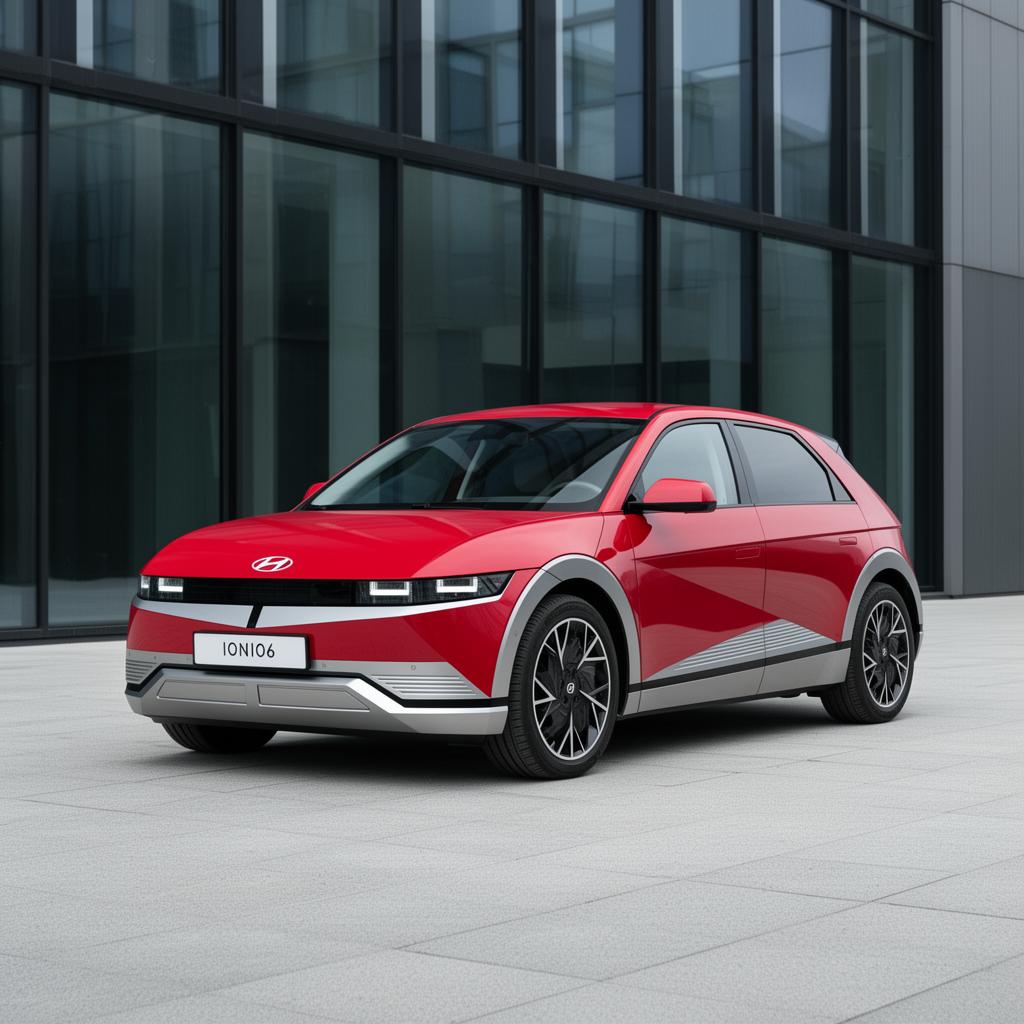
Two factors drive most of the real-world shortfall in Ireland specifically. The first is temperature. Cold batteries are less chemically efficient, and the cabin heating system draws meaningfully from the same battery that powers the drivetrain — unlike a petrol car where engine heat is essentially free. The second is speed. Aerodynamic drag increases with the square of velocity: driving at 130km/h uses considerably more energy than driving at 100km/h, and on exposed Irish motorways with frequent crosswinds, headwinds compound this effect further.
📐 Estimating real-world range for Irish conditions
Summer (15°C+), 100–110km/h: expect 85–90% of WLTP. A 400km WLTP car delivers approximately 340–360km.
Autumn/Spring (8–15°C), 110–120km/h: expect 78–85% of WLTP. That same 400km car delivers approximately 312–340km.
Winter (0–10°C), 120km/h with heating: expect 68–78% of WLTP. The 400km car delivers approximately 272–312km.
These are starting estimates — your car's displayed range will recalibrate after 20–30km of motorway driving and reflect actual conditions more accurately than the initial prediction at departure.
One thing worth understanding about your car's range display: if you've been doing short city trips for the past week, the predicted range shown at the start of a motorway journey may be optimistic — it's based on your recent consumption, which was urban and relatively efficient. Give it 20–30km of motorway and the display will settle to a more accurate figure. Don't be alarmed by the initial recalibration — it's the system working correctly.
Ireland's charging network — what's actually available
Ireland has over 1,800 public charge points across four main networks. Coverage on the major routes — the M1, M7/M8, M6, M9, N11, and N18 — is solid and has improved significantly since 2023. Rural coverage in the west and northwest is improving but remains patchier, particularly off the main arterial routes.
ESB ecars operates Ireland's largest network, with a mix of 22kW AC standard chargers and 50–100kW DC fast chargers at fuel forecourts, motorway service areas, and town centre locations. These are the units you'll find most reliably on Irish routes. Payment accepts the ESB ecars app and contactless card — no membership required to use them, though the app is useful for checking availability before you arrive.
Ionity operates high-power chargers (150–350kW) at motorway service locations. These are the fastest chargers on Irish roads — if your car can accept high-power DC charging, an Ionity stop can add 100–200km in 15–20 minutes. Ionity charges per kWh; a Passplus monthly membership significantly reduces the per-kWh rate if you travel long distances regularly.
EasyGo operates a mix of AC and DC charge points, increasingly including 50–150kW DC fast chargers at key locations. Like ESB ecars, they accept contactless payment directly.
Tesla Superchargers at select Irish locations are now accessible to non-Tesla vehicles via the Tesla app, with a CCS adapter. Pricing is per kWh through the app. Not every Supercharger location in Ireland has opened to non-Teslas yet — check the Tesla app before planning a stop at one.
🔌 DC connector types on Irish public chargers
CCS2 (Combined Charging System): The standard connector on all modern EVs sold in Ireland from 2020 onwards. Compatible with ESB ecars DC fast chargers, Ionity, and EasyGo fast chargers. If your car is a 2020 or newer non-Nissan, this is almost certainly what you have.
CHAdeMO: Used on older Nissan Leaf models (pre-2023). ESB ecars still maintains CHAdeMO connectors at many locations, but they are being phased out as fleet composition shifts. Check your specific route before relying on CHAdeMO availability.
Tesla CCS: All Tesla vehicles sold in Europe since 2019 use CCS2, not the proprietary connector. Tesla Superchargers in Ireland support CCS.
If you're unsure of your car's DC connector type, check the charging port directly — most cars have the AC connector at the top of the port and the DC connector at the bottom, with labels beside each.
Which Irish routes work easily and which need a stop planned
The table below covers the main long-distance routes from Dublin and between major Irish cities. Distance figures are approximate driving distances. "Comfortable" means a modern EV with 300km+ real-world winter range can complete the route without a charging stop. "Stop advisable" means most EVs benefit from one planned stop — not because they'll necessarily run out, but because arriving with 15–20% remaining is better than arriving with 5%.
| Route | Distance | Charging stop? | Suggested stop if needed |
|---|---|---|---|
| Dublin – Cork | ~257km | Comfortable without | ESB ecars at Cashel or Mitchelstown if battery management needed |
| Dublin – Galway | ~220km | Comfortable without | ESB ecars at Athlone if preferred |
| Dublin – Limerick | ~200km | Comfortable without | Portlaoise or Nenagh if needed |
| Dublin – Waterford | ~165km | Not needed | — |
| Dublin – Sligo | ~235km | Stop advisable in winter | ESB ecars at Carrick-on-Shannon or Mullingar |
| Dublin – Donegal Town | ~265km | One stop advisable | Enniskillen or Ballyshannon |
| Dublin – Killarney (Kerry) | ~345km | Yes — one stop | Cashel, Charleville, or Adare; plan the stop before you hit the N21/N22 |
| Cork – Galway | ~210km | Comfortable without | Limerick if preferred |
| Dublin – Belfast | ~165km | Not needed | Note: Newry or Drogheda chargers available en route |
| Belfast – Cork | ~490km | Yes — one to two stops | Dublin (M50 area) and Cashel or Mitchelstown |
The routes that consistently catch people out are the ones that look fine on a summer estimate and then fall short on a cold January day. Dublin to Kerry is the main example: 345km looks achievable if your car claims 400km WLTP, but at 75% real-world winter range that's 300km — and you'll want to arrive in Killarney with charge to spare, not anxious about the last 50km. One stop at Cashel, 20 minutes, solves it completely.
How to plan your charging stops — don't just trust the nav
Your car's built-in navigation shows where chargers are. It does not reliably show whether they're working. This is the gap that causes the most frustration on Irish road trips — driving to a marked fast charger and finding one of the two units out of service, or all bays occupied by cars that have finished charging but haven't been moved.
PlugShare is the most useful supplementary tool, and it's free. It shows community check-ins from other EV drivers confirming whether a specific charger was working when they arrived — typically within the last few hours. A charger that PlugShare shows as consistently reliable is a charger you can plan around. One showing multiple recent fault reports warrants a backup plan.
Use your car's navigation for route planning and PlugShare for charger status verification. They complement each other — neither alone gives you the full picture. If your car has integrated route planning (VW ID series, Tesla, Hyundai IONIQ range, and most modern EVs), it will calculate which charging stops are needed and factor remaining range into the route — this is more reliable than manually estimating.
⚠️ The occupied-charger problem
Fast charger bays in Ireland are occasionally blocked by cars that have finished charging but haven't moved — the driver has gone for coffee, shopping, or worse, parked for hours. At a two-bay ESB ecars site, one occupied-and-finished car can halve your available capacity.
The practical mitigation: plan to arrive at a charger with 15–20% remaining, not 5–8%. If a bay is blocked, you have the range to drive 8–12km to the next available charger without stress. If you arrive on 5%, you don't have that option. Buffer is not anxiety — it's the same logic as not letting a fuel car drop to the last warning light.
What actually happens at an Irish rapid charger
The typical ESB ecars 50kW DC fast charger adds roughly 200–250km of real-world range per hour of charging. In a 20–25 minute stop, you'll typically add 70–100km — enough to complete most Irish legs comfortably. At a 150kW Ionity charger, a 20-minute stop can add 100–200km depending on your car's maximum charge rate (most family EVs accept 50–100kW; some premium models accept 150–350kW).
The process itself is straightforward. Plug in (the connector type matters — see the CCS/CHAdeMO note above). The charger authenticates — either via the network's app, a contactless card tap, or in some cases automatically when plugged in. Charging begins within 30–60 seconds. Your car's dashboard will show power input (kW) and charging progress. You don't need to stay in the car.
Charging speed typically peaks in the first few minutes and then tapers as the battery approaches 80%. Most EVs slow DC charging above 80% state of charge to protect battery longevity — this is normal and expected. For a road trip stop, targeting 70–80% and driving on is more time-efficient than waiting for 100%. You'll complete the session and be back on the road in 20–30 minutes for a typical Irish leg.
The second stop is always easier than the first. By the time most drivers have made their first planned charging stop on an Irish motorway — twenty minutes, a coffee, 100km added — the mental model of an EV road trip has permanently changed.
Check if a public charging membership pays off for you
If you travel long distances regularly, an Ionity Passplus or ESB ecars membership can significantly reduce your per-kWh charging cost. De Energy Hub's membership comparison calculator works out whether any Irish public charging membership saves you money based on your actual usage pattern.
Compare membership costs →Cold weather and motorway speeds: managing the range penalty
Two specific habits make a meaningful difference in cold Irish conditions, and neither requires any compromise on comfort.
The first is preconditioning. Most modern EVs allow you to schedule cabin warming (or cooling) while the car is still plugged in at home. Warming the cabin from grid power rather than battery power preserves 10–25km of range on very cold days — the heating demand that would otherwise drain the battery in the first 20km is handled before you unplug. It also means you leave with a warm cabin, which matters in January. Set a departure time in your car's app the night before.
The second is speed management. The energy cost of driving at 130km/h versus 110km/h is not linear — aerodynamic drag scales with the square of velocity. On a long Irish motorway run in cold conditions, dropping from 130 to 110km/h adds roughly 15–20% to your available range. That's often the difference between needing a charging stop and not. On a route that's borderline, it's worth the extra 10–15 minutes.
Seat heaters are dramatically more efficient than the cabin heating fan for keeping you warm. If your car has heated seats and a heated steering wheel, using them instead of turning the climate control to a higher temperature can preserve several kilometres of range on a cold motorway run — the heated elements use a fraction of the energy of the blower fan.
Pre-trip preparation: the one thing most people don't do
Unlike daily driving — where charging to 80% is common practice to protect long-term battery health — a long trip is one of the few situations where starting at 100% (or 90–95%) is the right call. The incremental degradation from occasional full charges is minimal; the practical benefit of an extra 40–60km of real-world range at the start of a journey is meaningful.
Set your car to finish charging 20–30 minutes before you plan to leave. Most EVs and charging apps let you schedule this by departure time. Starting the trip on a battery that reached full charge recently — rather than one that's been sitting at 100% overnight — delivers slightly better real-world range in cold conditions.
Before leaving, confirm two things: your planned charging stop location and the next charger past it. Not because you'll need the backup — but because knowing it exists means the first stop is a decision rather than a rescue. That's the difference between a planned journey and a stressful one.
✅ Pre-trip checklist for a long Irish EV journey
The night before: Schedule charging to reach 100% 30 minutes before departure. Set a departure time in your car's app to trigger preconditioning.
Morning of: Check PlugShare for your planned charging stops — confirm the unit has recent positive check-ins. Note the next charger past your planned stop as a backup.
Before you set off: Precondition the cabin if temperatures are below 5°C. Allow the range display to recalibrate after 20–30km of motorway before drawing conclusions.
During the journey: Plan to arrive at each charging stop with 15–20% remaining — not because you'll be short, but because it keeps options open if a bay is occupied.
Estimate your EV's range for your next Irish journey
De Energy Hub's EV range calculator adjusts for Irish weather conditions, your speed, payload, and climate control usage — giving you a realistic range estimate rather than the WLTP brochure figure.
Open the range calculator →
Know exactly what's waiting before you get there
Beyond the big public networks, De Energy Hub lists chargers and parking at hotels, retail parks and other stops along your route — searchable by location, so you can book a Park & Charge spot ahead of time instead of hoping a bay is free when you arrive.
Where to find chargers on your route
The most reliable way to find chargers before and during an Irish journey is a combination of three resources. Your car's built-in route planner, if it has one, gives the best integrated experience — it knows your current battery state, planned destination, and consumption history, and will suggest stops automatically. PlugShare provides real-time community status that no network app matches for accuracy. And the ESB ecars app lets you check specific unit availability and start a session remotely before you leave your car.
A few route-specific resources worth bookmarking: the De Energy Hub EV directory lists the maximum DC charge rate for every EV available in Ireland — useful for comparing how quickly your specific car will charge at different charger types before you plan a stop around them.
Route anxiety is almost always range anxiety in disguise. The actual number — how far your car will go today, in these conditions, at this speed — dissolves it completely. Know the number and you know the trip.
Frequently asked questions about EV road trips in Ireland
Frequently asked questions
What is the real-world range of an electric car on an Irish motorway in winter?
On a cold Irish day under 10°C at motorway speeds of 110–120km/h, expect roughly 70–80% of the WLTP figure. A car rated at 450km WLTP will typically deliver 315–360km. In summer at more moderate speeds, 85–90% of WLTP is a more realistic estimate. Cold batteries are less efficient, and cabin heating draws from the same battery that powers the drivetrain.
Can I drive from Dublin to Cork in an electric car without stopping to charge?
Yes, for most modern EVs. Dublin to Cork is 257km — any EV with a WLTP range above 350km should complete it without a charge stop in mild conditions. On a cold January day, a brief top-up at Cashel or Mitchelstown takes 20 minutes and provides a comfortable buffer for the final leg.
Which public charging networks operate on Irish motorways?
The main networks are ESB eCars (Ireland's largest, 22kW AC and 50–100kW DC), Ionity (150–350kW ultra-rapid at motorway service locations), EasyGo (50–150kW DC), and select Tesla Supercharger locations now open to non-Tesla vehicles via the Tesla app. All accept contactless payment — no membership required.
How long does a charging stop take at an Irish motorway fast charger?
A 20–25 minute stop at a 50kW ESB eCars fast charger adds roughly 70–100km of real-world range. At a 150kW Ionity charger, 20 minutes can add 100–200km depending on your car's maximum charge rate. Targeting 70–80% state of charge and driving on is more time-efficient than waiting for 100% — charging slows significantly above 80%.
What app should I use to find working EV chargers in Ireland?
PlugShare is the most reliable for real-time charger status — community check-ins confirm whether a specific unit was working when the last driver arrived. Use your car's built-in navigation for route planning and PlugShare alongside it for verification. The ESB eCars app shows live bay availability at specific sites before you arrive.
Should I charge my EV to 100% before a long trip in Ireland?
Yes. Unlike daily use where 80% is recommended, a long trip is one of the few situations where starting at 100% (or 90–95%) makes practical sense. Schedule charging to finish 30 minutes before departure and use cabin preconditioning if temperatures are below 5°C — this can add 10–25km of real-world range in cold conditions.
Can I drive from Dublin to Galway in an EV without stopping to charge?
Yes — Dublin to Galway is approximately 220km, well within the comfortable range of most modern EVs. An optional stop at the ESB eCars charger in Athlone takes 15 minutes and leaves a full buffer for the rest of the journey, but is not necessary for any EV with a WLTP range above 300km in mild conditions.
Information verified against SEAI.ie and current Irish market data — April 2026. Always confirm grant amounts and eligibility at seai.ie before purchasing.