Benefit-in-Kind on company cars has been recalibrated almost every Budget since 2022. The result is a system that accountants and payroll professionals find complicated, and that most company car drivers navigate by assumption — either assuming BIK is trivial, or assuming it's enormous, without doing the actual calculation. For 2026, both assumptions are more wrong than ever, because the rules have changed again and the gap between an electric vehicle and a high-emission diesel has widened to the point where it's becoming the primary driver of company car policy decisions across Irish businesses.
This guide walks through how BIK is calculated, what Budget 2026 changed, and what the full picture looks like for a company car driver, a sole trader with a business vehicle, and a fleet manager trying to model the transition to electric across a mixed fleet. Numbers are sourced from Revenue.ie and confirmed professional guidance — always verify at Revenue.ie and consult your tax adviser before making decisions based on any BIK figures.
What BIK actually is — and why it shows up on your payslip
Benefit-in-Kind is income you receive in a non-cash form. If your employer provides you with a car that you can use privately — including for your daily commute — Revenue treats that private use as taxable income. The cash equivalent of the benefit is added to your taxable pay, and you pay Income Tax, USC, and PRSI on it through PAYE, in the same way you pay tax on your salary.
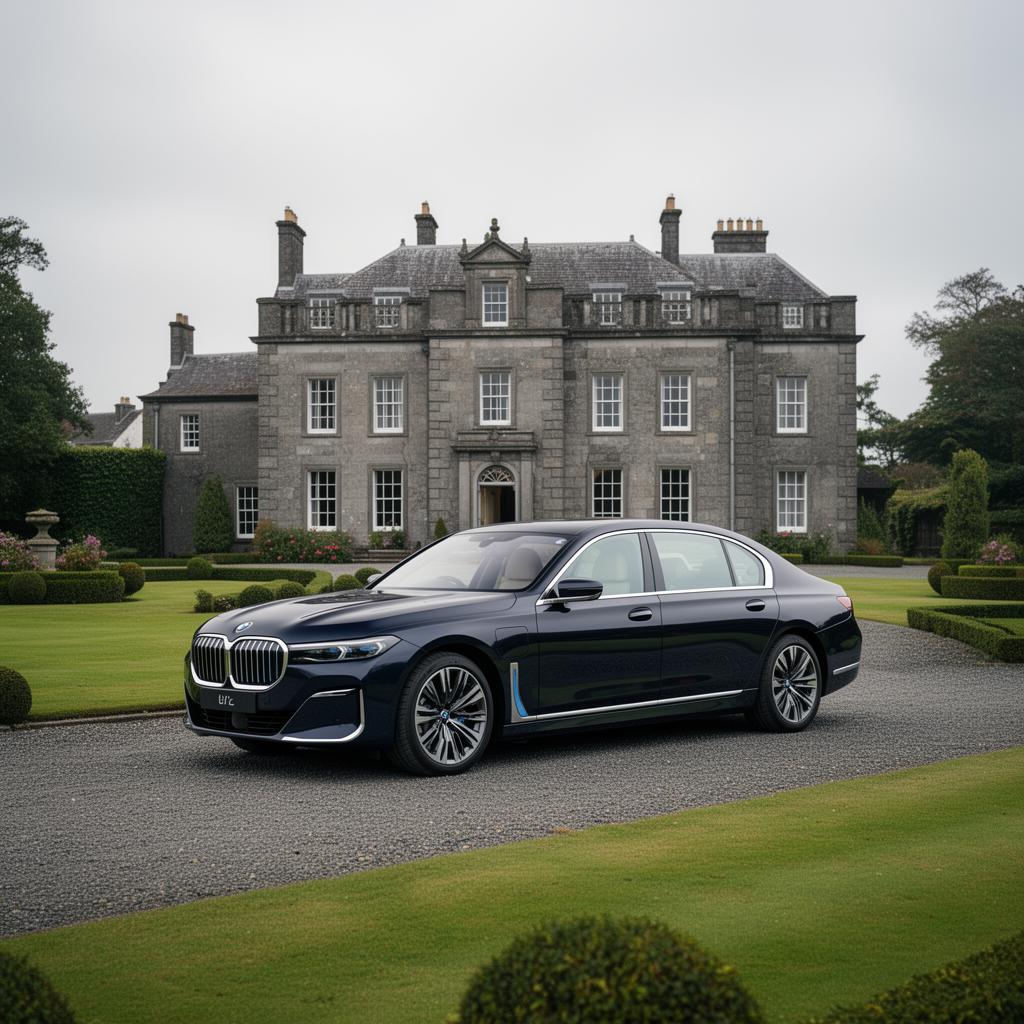
The important thing to understand is that BIK is not a separate tax — it is additional taxable income. If you are a higher-rate taxpayer and your BIK notional pay for the year is €4,000, you are not paying €4,000 extra in tax. You are paying income tax, USC, and PRSI on €4,000 of additional notional income. At a combined marginal rate of roughly 52% (40% income tax + 8% USC + 4% PRSI at the higher rate), that €4,000 costs you approximately €2,080 in additional tax per year, appearing as a deduction across your monthly or weekly payslips.
That is a meaningful cost. It is also far from the worst-case BIK number in Ireland in 2026 — which is why understanding the calculation matters.
The three things that determine your BIK
Since January 2023, company car BIK in Ireland has been calculated using three inputs. They multiply together to give the annual notional pay figure that Revenue adds to your taxable income.

1. Original Market Value (OMV) — This is the price the car would have fetched when it was first registered, before any discounts, grants, or VRT adjustments. It is the retail price, including VAT and delivery, at first registration. The SEAI private car grant is paid after registration and does not reduce the OMV for BIK purposes. This catches some people by surprise — the OMV for BIK calculations is the sticker price, not what was actually paid.
2. CO₂ emissions category — This determines the BIK percentage rate applicable to the vehicle. Since 2023, cars have been placed into categories from A1 (zero emission) through to E (highest emission) based on their CO₂ output in grams per kilometre. A higher CO₂ category means a higher BIK percentage rate, which means a higher annual notional pay figure.
3. Annual business mileage — Within each CO₂ category, the BIK percentage varies based on how many kilometres are driven for business purposes during the year. Higher business mileage reduces the BIK percentage. This is the element most commonly misunderstood — and the one most commonly contested at Revenue audit.
The formula is: BIK notional pay = (OMV less any applicable reductions) × BIK percentage for your category and mileage band.
Category A1: what changed on 1 January 2026
Before 2026, battery electric vehicles sat within Category A of the BIK emissions table — the same category as all other cars with CO₂ emissions between 0 and 59g/km. This meant EVs were sharing a category with very efficient petrol and hybrid cars, and their BIK rates reflected that broader band rather than their zero-emission status specifically.
From 1 January 2026, a new Category A1 was introduced — exclusively for vehicles with zero CO₂ emissions. Battery electric vehicles are now their own category. Category A1 carries lower BIK percentage rates than the standard Category A, which means every EV with a company car arrangement qualifies for the most favourable possible starting rate before any OMV reductions are applied.
⚡ Category A1 BIK rates — 2026
The following rates apply to all zero-emission company vehicles (BEV only — plug-in hybrids are not eligible for A1) from 1 January 2026. Rates are determined by annual business kilometres driven.
| Annual business km | A1 BIK rate (EV only) | Notes |
|---|---|---|
| Up to 26,000 km | 15% | Typical for low-mileage company car drivers |
| 26,001 – 39,000 km | 12% | Most field sales and service roles |
| 39,001 – 48,000 km | 9% | High-mileage road reps and commercial roles |
| More than 48,001 km | 6% | Highest-mileage band — permanently reduced threshold from 2026 |
To put those rates in context: for a high-emission diesel car in Category E (more than 170g/km CO₂), the BIK rate on the same mileage bands runs from 30% to 37.5%, with no OMV reduction available. The gap between the most and least efficient vehicle categories has never been wider. Verify current rates at Revenue.ie.
One additional change made permanent from 1 January 2026: the lower limit of the highest mileage band has been permanently reduced from 52,001 km to 48,001 km. Drivers crossing 48,001 km in annual business travel now qualify for the lowest BIK rate — a change that benefits high-mileage employees who previously had to reach 52,001 km to access the same rate.
The €30,000 combined OMV reduction — how it works for EVs
The BIK rate is only one part of the calculation. The other, often more significant part is the reduction to the Original Market Value before the rate is applied. In 2026, company EVs benefit from two overlapping OMV reductions that together take €30,000 off the taxable base before BIK is calculated.

💰 The 2026 EV OMV double reduction
Universal reduction (applies to categories A1 through D): €10,000 reduction to OMV. Applies to all cars in those categories in 2026, including petrol, diesel and hybrid — not just EVs.
EV-specific relief (applies to category A1 only): An additional €20,000 reduction to OMV, applying exclusively to battery electric vehicles. This is in addition to the €10,000 universal reduction.
Combined total for EV company cars in 2026: €30,000 off the OMV. This reduction applies from the first euro — if the combined reduction brings the OMV below zero, no BIK arises at all.
Verify current reliefs at Revenue.ie.
This means an EV with an OMV of €30,000 or less attracts zero BIK notional pay in 2026, regardless of mileage band — because the combined reduction wipes out the taxable base entirely. An EV at €40,000 OMV has a taxable base of €10,000 after reductions. An EV at €55,000 OMV has a taxable base of €25,000.
The reduction applies to the OMV at the point the vehicle is made available — the original market value when the car was first registered, not the current market value of a used vehicle. For a company car arrangement starting in 2026 with a new vehicle, the OMV is the full list price including VAT, delivery, and any accessories included at the point of first registration.
The numbers: EV vs diesel in 2026, side by side
The most effective way to understand the 2026 BIK position is with a direct comparison. Revenue provides this example in their own published guidance — an electric car versus a high-emission car at similar OMV, same mileage, same tax year.
Using Revenue's own worked example for 2026, with a driver on fewer than 26,000 annual business kilometres:
⚡ Battery Electric Vehicle (A1)
⛽ High-emission diesel (Category E)
At a 52% combined marginal rate, those notional pay figures translate to approximately €1,950 in additional annual tax for the EV driver versus approximately €9,750 for the Category E diesel driver. On a five-year company car term, that is a difference of roughly €39,000 in personal tax — at which point the BIK treatment alone justifies the switch to electric for most higher-rate taxpayers, entirely independent of running costs or fuel savings.
Even for mid-range petrol and diesel vehicles that sit in categories B, C or D — where the universal OMV reduction does apply — the A1 rates available to EV drivers are substantially lower than the rates available at the same mileage level in non-zero-emission categories. The combination of the larger OMV reduction and the dedicated A1 percentage table makes EV company cars the most tax-efficient vehicle option in Ireland in 2026 by a significant margin.
2026 is the peak year for the EV company car tax advantage. The €20,000 EV-specific OMV relief drops to €10,000 in 2027 and disappears by 2029. Fleet decisions made this year lock in the best terms available — and the gap to petrol and diesel widens again for anyone choosing a high-emission vehicle.
The tapering schedule: 2026 is as good as it gets
The EV-specific OMV relief and the universal OMV reduction are both time-limited. Budget 2026 confirmed the schedule, and it is not favourable to those who wait. Here is the full picture for the next four years:
| Year | EV-specific OMV relief | Universal OMV reduction (A1–D) | Total EV reduction | Status |
|---|---|---|---|---|
| 2026 | €20,000 | €10,000 | €30,000 | ✓ Current |
| 2027 | €10,000 | €5,000 | €15,000 | 📅 Scheduled |
| 2028 | €5,000 | €2,500 | €7,500 | 📅 Scheduled |
| 2029 | €0 | €0 | €0 | Full BIK applies |
An EV placed with an employee in January 2026 at an OMV of €45,000 has a 2026 taxable base of €15,000. The same vehicle placed in January 2027 — when the total reduction drops to €15,000 — has a taxable base of €30,000. On the same mileage and same A1 rate, the 2027 notional pay is double the 2026 figure. By 2029, the full OMV applies with no reduction.
Fleet managers planning vehicle replacement cycles should model 2026 procurement separately. The BIK benefit for vehicles ordered now and delivered in 2026 is categorically different from orders placed for 2027 delivery — and the reduction in benefit is not gradual. It halves between 2026 and 2027.
VRT relief: the additional saving that expires 31 December 2026
Benefit-in-Kind and VRT relief are separate incentives from separate government bodies. BIK is a Revenue matter. VRT relief for battery electric vehicles is confirmed extended to 31 December 2026 — and applies at the point of first registration, reducing the Vehicle Registration Tax payable on a new BEV.
🚘 VRT relief for BEVs in 2026
For BEVs with an OMSP up to €40,000: Full VRT relief applies, up to a maximum of €5,000.
For BEVs with an OMSP between €40,000 and €50,000: Tapered relief — graduated reduction between full and zero.
For BEVs with an OMSP above €50,000: No VRT relief applies.
OMSP (Open Market Selling Price) is Revenue's own valuation at registration — check the specific figure at revenue.ie. The relief is available for 2026 but has not been confirmed for 2027. Fleet procurement decisions that depend on VRT relief should account for the possibility that it does not continue beyond 31 December 2026.
For a fleet manager purchasing a Tesla Model Y or VW ID.4 for a company car driver, VRT relief in the €2,000–€5,000 range is a real saving at the point of acquisition — stacked on top of the BIK benefit that applies year-on-year through the life of the car. For higher-value EVs above €50,000 OMSP, the VRT relief is not available, but the BIK treatment still applies in full.
The SEAI Business EV Grant: €3,500 the dealer handles for you
Business buyers purchasing a new M1-category battery electric vehicle for company use are also eligible for the SEAI Business EV Grant of €3,500 — the same grant available to private buyers, processed through the same mechanism. The dealer applies for the grant and deducts it from the purchase price. The grant is capped at 10 M1 vehicles per company per year.
The €3,500 SEAI Business EV Grant is entirely separate from the BIK treatment. It reduces the acquisition cost at point of purchase, not the OMV for BIK purposes — SEAI grants are paid after registration and do not reduce the OMV figure Revenue uses for BIK calculations. A company ordering a VW ID.4 for a company car driver gets the €3,500 grant off the purchase price and the €30,000 OMV reduction when calculating the driver's annual BIK notional pay. Both are real and both apply simultaneously.
Verify current eligibility, price thresholds, and the cap at seai.ie.
The home charger BIK exemption: what employers can fund tax-free
One of the more practical provisions in recent Finance Acts is the BIK exemption for employer-funded home charging points. Where an employer provides a battery electric vehicle as a company car and also funds the installation of a home charging point at the employee's private residence, that cost is exempt from BIK — provided the employer-provided vehicle is a pure battery electric vehicle and not a plug-in hybrid.
In plain terms: if a company gives an employee a BEV as a company car, the company can also pay for the home charger installation at the employee's house without that installation cost being treated as a taxable benefit to the employee. The installation cost — typically €600–€1,500 depending on the property and charger specification — is funded by the employer, is BIK-exempt, and makes the overall company car package considerably more practical for employees who primarily charge at home.
🔌 The practical upshot for fleet policy
A fleet manager moving to all-BEV company cars can build home charger installation into the standard vehicle package as a BIK-exempt employer cost. This addresses one of the most common barriers employees raise when asked to transition from a diesel company car — where do I charge at home? — without creating an additional tax liability for the driver.
The SEAI Home Charger Grant of €300 is also available to the employee separately, applied through the installer, for eligible smart chargers. The employer-funded home charger and the SEAI €300 grant are two separate things — both apply, and neither conflicts with the other. Confirm current BIK exemption details with your tax adviser and at revenue.ie.
Browse the 24 home EV chargers in the De Energy Hub EV charger directory →
There is also a separate BIK exemption for workplace charging facilities — where an employer provides a workplace EV charger that is available to all employees, the electricity cost and charger provision are not treated as a BIK liability. This applies to all EVs charged at the workplace, not exclusively company cars.
Company vans: different rules, same direction
Company vans are treated differently from company cars for BIK purposes. The BIK rate on vans is 8% of the OMV — a flat rate, without the CO₂-based category table that applies to cars. This 8% rate applies to both petrol/diesel vans and electric vans, which means the dramatic BIK rate differential that exists for cars does not apply in the same way for commercial vehicles.
What does change significantly for electric vans is the acquisition cost picture. The SEAI Commercial Van Grant provides €7,600 for qualifying large panel vans (N1L category) and €3,800 for smaller N1S vans — per-vehicle grants that change the business case considerably, particularly for operators running high-mileage urban or suburban routes where fuel savings are material.
🚐 Electric van at a glance: 2026
BIK rate: 8% of OMV — same rate as diesel vans. No A1 category advantage for vans.
SEAI grant (N1L large panel van): €7,600 per vehicle, claimed by the business via SEAI after purchase.
SEAI grant (N1S smaller van): €3,800 per vehicle.
Motor tax: €120/year — significantly less than a diesel van's annual motor tax.
Fuel cost: Home or workplace charging at off-peak rates typically delivers 80–90% savings on fuel costs compared to a diesel van of equivalent payload.
Browse all 27 electric vans available in Ireland — including the Ford E-Transit, Mercedes eSprinter, and Kia PV5 — in the De Energy Hub EV directory →
For heavier vehicles — trucks and buses — the ZEHDV (Zero Emission Heavy Duty Vehicle) scheme provides grants of €50,000 per qualifying N3 truck or M3 bus, administered by Transport Infrastructure Ireland. The maximum grant per company per application is €500,000. The scheme was expanded in early 2026 to include a rolling funding model and infrastructure grants. Applications via zehdvgrant@pierse.ie.
Mileage records: the one thing that gets company car drivers in trouble at audit
The BIK system's reliance on annual business mileage as a determining factor creates a significant compliance risk that many employers underestimate. Revenue has been clear: the onus is on the employer to maintain accurate mileage records, and the default assumption in the absence of records is the least favourable mileage band for the employee.
⚠️ The audit risk employers get wrong every year
Revenue requires that annual business mileage be substantiated by verifiable records — not estimates, not averages, not the total distance less a fixed private allowance. There is a widespread industry practice of deducting a fixed 8,000 km for private use from total annual mileage — Revenue explicitly identifies this approach as incorrect when used as a benchmark rather than a genuine estimate supported by records.
Where records are wholly absent, Revenue will apply the highest BIK rate for the relevant category, and may assess penalties and interest in addition to the underpaid tax. Fleet managers transitioning to EVs — where the BIK advantage is most sensitive to mileage band — should ensure mileage logging systems are in place before the transition, not after an audit.
Practically, a fleet manager moving vehicles to electric should have a mileage recording system operational from day one of the new fleet arrangement. The difference between the 15% rate (under 26,000 km) and the 9% rate (39,001–48,000 km) for an A1 EV at €45,000 OMV is the difference between €2,250 and €1,350 in annual notional pay — worth documenting accurately for both employer and employee.
Mileage logging apps, GPS tracking on fleet vehicles, and regular review of documented mileage versus payroll assumptions at least quarterly are all standard practice. Real-time payroll reporting requirements mean employers are expected to submit BIK amounts each pay period — making a year-end true-up increasingly difficult to defend as an audit position.
Five years of running costs: the honest comparison
BIK is the tax treatment of the company car perk. Total cost of ownership covers the full picture — acquisition cost, fuel or charging cost, servicing, insurance, residual value, and the employee's net-of-tax BIK burden. For a five-year company car term, the comparison between an EV and a comparable diesel has shifted substantially in 2026.
Using a mid-range company car scenario — €45,000 OMV, a driver doing 25,000 business kilometres per year, marginal tax rate 52%:
| Cost item | EV (A1, €45k OMV) | Equivalent diesel (Cat D, €45k OMV) |
|---|---|---|
| SEAI Business Grant | −€3,500 | None |
| VRT relief (2026, approx) | ~−€2,000–€5,000 | None |
| BIK notional pay — Year 1 (2026) | €15,000 × 15% = €2,250 | ~€32,500 × 22.5% = ~€7,313 |
| Employee additional tax — Year 1 | ~€1,170 | ~€3,803 |
| Fuel/charging cost (25,000 km) | ~€750–€900 (home/work charging) | ~€3,500–€4,200 (diesel, current prices) |
| Motor tax | €120/year | ~€390–€750/year (varies by emissions) |
| Servicing (indicative) | Lower (no oil changes) | Higher |
The five-year BIK differential — with the EV receiving the tapering schedule of €30k OMV reduction in 2026, €15k in 2027, €7.5k in 2028, and €0 from 2029 — means the employee in an EV company car pays significantly less cumulative BIK tax over the term than they would in a comparable diesel, even accounting for the full phasing-out of the OMV relief by 2029. When fuel savings and motor tax are added, the total cost of ownership comparison favours the EV company car for most typical business users in 2026.
All figures above are indicative — actual costs vary by vehicle, charging arrangement, mileage pattern, and individual tax position. Use the fleet grant calculator to model your specific numbers, and verify BIK rates with your payroll provider or tax adviser before making procurement decisions.
Model your fleet's full grant and BIK picture
De Energy Hub's fleet grant calculator works through your vehicle mix — cars, vans, and heavy vehicles — and shows the total SEAI grant value, ZEHDV eligibility, and projected BIK impact for your company. Works for fleets of 1 vehicle or 50.
Calculate your fleet savings →What fleet managers should do now
The BIK rules changed on 1 January. Payroll providers should have applied the new A1 category and OMV reductions from the January 2026 payroll run. If you have not confirmed this, the review should happen before the next payroll cut-off.
Confirm your payroll applies A1 rates and the correct OMV reductions from January 2026
Check that BEV company cars are categorised as A1 (not Category A) and that the combined €30,000 OMV reduction is being applied before the BIK percentage is calculated. Any payroll run from January onwards should reflect the new rules.
Audit your mileage recording system
If mileage logs are maintained informally or by estimation, start a proper recording system now. The difference between mileage bands is meaningful and Revenue expects the records to substantiate the band claimed. GPS fleet tracking or a dedicated mileage logging app are both acceptable.
Model 2026 versus 2027 procurement
For any vehicle replacement decisions due in the next 12 months, calculate the five-year BIK cost difference between procuring in 2026 (€30,000 OMV reduction) versus 2027 (€15,000 total). The gap is material. For high-value vehicles, it can justify accelerating a replacement cycle.
Confirm SEAI Business EV Grant eligibility
The €3,500 SEAI Business EV Grant is available on up to 10 M1 vehicles per company per year. If ordering multiple vehicles, verify the cap and whether your company has used any of this year's allocation. The dealer processes the grant — confirm it is applied before the purchase order is finalised.
Consider employer-funded home charger installation
Build employer-funded home charger installation into the BEV company car package as a BIK-exempt employer cost. This removes the most common practical objection and costs the employer the installation fee — typically €600–€1,500. The SEAI €300 grant still applies separately via the installer.
The system has been redesigned to make company EVs the most tax-efficient vehicle choice in Ireland — but only for those who understand the calculation and act before the tapering schedule removes the advantage they currently have.
Where to find the vehicles
De Energy Hub's EV vehicle directory covers all 205 electric vehicles available in Ireland in 2026 — including every car eligible for the SEAI Business EV Grant, all 27 electric vans qualifying for the €3,800–€7,600 N1S/N1L commercial grant, and the full range of trucks and buses eligible for the ZEHDV €50,000 scheme. Every vehicle is listed with real Irish pricing, SEAI grant eligibility, VRT relief status, and real-world range estimates.
🗂️ Find your fleet vehicles
EV Vehicle Directory → 205 electric vehicles — cars, vans, trucks, buses, motorcycles and campervans. Filter by category, price, range and SEAI grant.
Fleet Grant Calculator → Enter your vehicle mix and get the full grant picture — SEAI Business EV Grant, commercial van grant, ZEHDV, and projected BIK impact.
EV Charger Directory → 24 home and business chargers — solar-compatible and SEAI-eligible models flagged, including models suitable for employer-funded home charger schemes.
Find EV charging near you — or turn your fleet charger into an asset
De Energy Hub app connects EV drivers to bookable parking and charging hubs across Ireland. Businesses list their charger, set their energy rate, and manage fleet and visitor charging from one dashboard. No new hardware required.
Explore De Energy Hub app →
Frequently asked questions
What is the BIK rate for electric company cars in Ireland in 2026?
Benefit-in-Kind on company cars has been recalibrated almost every Budget since 2022. The result is a system that accountants and payroll professionals find complicated, and that most company car drivers navigate by assumption — either assuming BIK is trivial, or assuming it's enormous, without doing the actual calculation.
How much tax do I pay on an electric company car in Ireland in 2026?
This guide walks through how BIK is calculated, what Budget 2026 changed, and what the full picture looks like for a company car driver, a sole trader with a business vehicle, and a fleet manager trying to model the transition to electric across a mixed fleet. Numbers are sourced from Revenue.ie and confirmed professional guidance — always verify at Revenue.ie and consult your tax adviser before making decisions based on any BIK figures.
Is an electric company car worth it for BIK in Ireland in 2026?
Benefit-in-Kind on company cars has been recalibrated almost every Budget since 2022. The result is a system that accountants and payroll professionals find complicated, and that most company car drivers navigate by assumption — either assuming BIK is trivial, or assuming it's enormous, without doing the actual calculation.
What is the OMV reduction for electric company cars in Ireland in 2026?
1. Original Market Value (OMV) — This is the price the car would have fetched when it was first registered, before any discounts, grants, or VRT adjustments. It is the retail price, including VAT and delivery, at first registration. The SEAI private car grant is paid after registration and does not reduce the OMV for BIK purposes. This catches some people by surprise — the OMV for BIK calculations is the sticker price, not what was actually paid.
How do I calculate BIK on an electric car in Ireland?
This guide walks through how BIK is calculated, what Budget 2026 changed, and what the full picture looks like for a company car driver, a sole trader with a business vehicle, and a fleet manager trying to model the transition to electric across a mixed fleet. Numbers are sourced from Revenue.ie and confirmed professional guidance — always verify at Revenue.ie and consult your tax adviser before making decisions based on any BIK figures.
Do PHEVs qualify for the electric car BIK relief in Ireland?
Benefit-in-Kind on company cars has been recalibrated almost every Budget since 2022. The result is a system that accountants and payroll professionals find complicated, and that most company car drivers navigate by assumption — either assuming BIK is trivial, or assuming it's enormous, without doing the actual calculation.
How does the 2026 A1 BIK category work for zero-emission cars in Ireland?
Benefit-in-Kind on company cars has been recalibrated almost every Budget since 2022. The result is a system that accountants and payroll professionals find complicated, and that most company car drivers navigate by assumption — either assuming BIK is trivial, or assuming it's enormous, without doing the actual calculation.
Information verified against SEAI.ie and current Irish market data — April 2026. Always confirm grant amounts and eligibility at seai.ie before purchasing.