The most common assumption about electric vans in Ireland is that they are too expensive, too limited on range, or too far behind diesel to make practical sense for a working vehicle. All three of those assumptions were reasonable four years ago. None of them is accurate now, and the SEAI commercial van grant — which most van buyers either don't know exists or assume is trivially small — changes the acquisition cost picture enough to make the comparison with diesel much closer than the sticker prices suggest.
This guide covers the grant structure in full — including the distinction between N1S and N1L that determines which tier you qualify for — the application process, the models available across both categories, and an honest look at the total cost of running an electric van in Ireland versus a diesel equivalent. Figures are sourced from SEAI and verified manufacturer specifications — always confirm current grant amounts and eligibility at seai.ie before committing to a purchase.
The two grants and what separates them
SEAI administers two separate commercial van grants for battery electric vehicles in the N1 category — the category covering light commercial vehicles with a technically permissible maximum mass of up to 3,500 kg. The grant tier depends on a specific technical classification, not simply on how big the van looks or how it's described in a brochure.
🚐 SEAI Commercial Van Grant — 2026 grant tiers
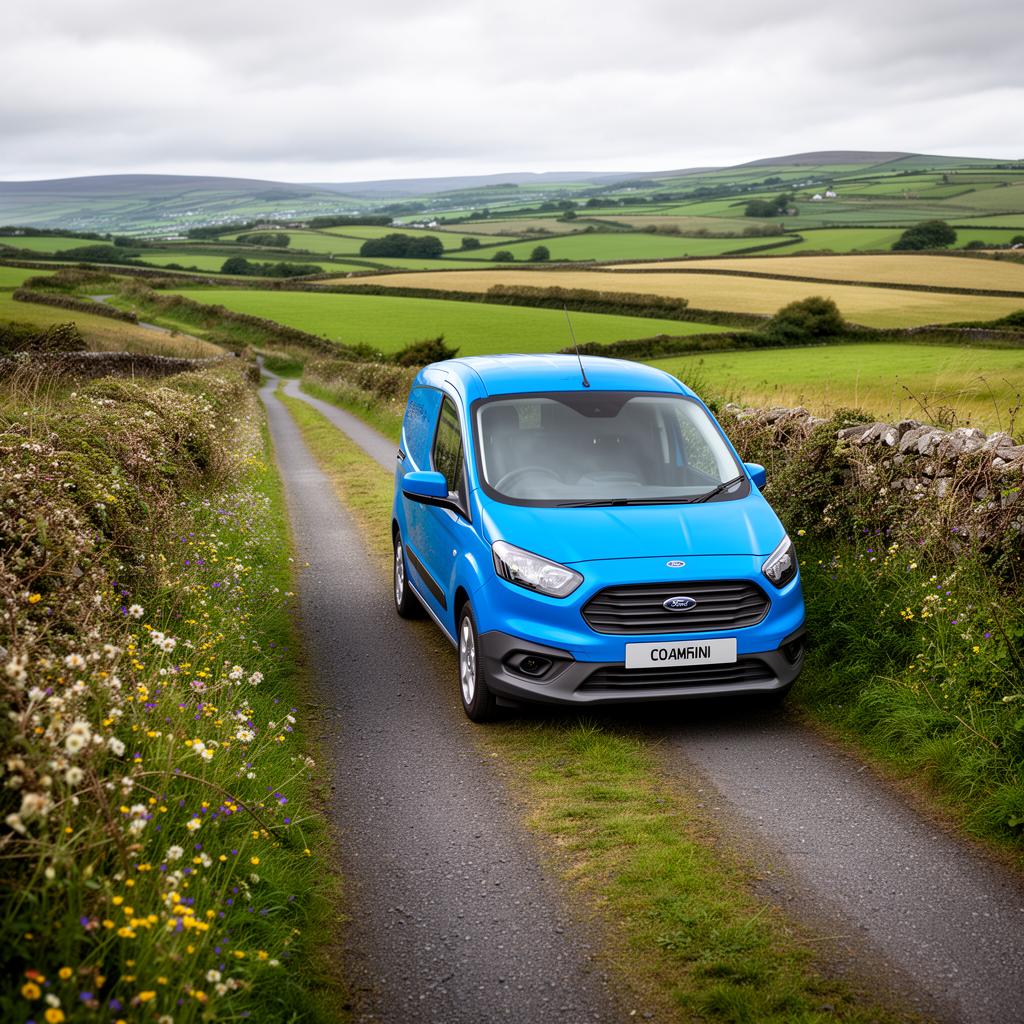
N1S — small to medium vans: €3,800 SEAI grant. Applies to new BEVs in the N1 category with a technically permissible maximum mass below 3,500 kg. Includes car-derived vans, small panel vans, and most compact cargo vans. Price cap: the full price to the customer must not exceed €60,000.
N1L — large panel vans: €7,600 SEAI grant. Applies to new BEVs in the N1 category with a technically permissible maximum mass of exactly 3,500 kg. These are the large panel vans — Ford E-Transit, Mercedes eSprinter, Renault Master E-Tech and their equivalents. Price cap: €90,000.
Both grants apply to new vehicles only — used vans do not qualify. A grant offer must be in place before the vehicle is registered; applying after registration means the grant is lost. Verify at seai.ie.
The distinction between N1S and N1L is a technical vehicle classification determined by the manufacturer's type approval — it is not a subjective size description. Your dealer will know which category applies to the specific model you're buying, and SEAI will verify it against the vehicle registration data at time of application. The practical consequence of getting it wrong: if you apply for an N1L grant on a vehicle that registers as N1S, SEAI will cancel the application entirely and no grant is paid. Apply for the correct tier from the outset.
Both van grants are active in 2026. Neither is being phased out on a taper the way the BIK OMV relief is being reduced for company cars. The grants have remained stable and represent a real, uncomplicated saving on the acquisition cost of a qualifying electric van.
How the grant is claimed — and why it is different from the car grant
The car grant (for M1 private buyers) is deducted at point of sale by the dealer — the buyer simply pays the net price. The commercial van grant does not work this way. The business claims the grant through SEAI after purchase, meaning the full invoice price is paid first and the grant is received separately. This distinction matters for cash flow planning, particularly for smaller businesses buying on their own account rather than through finance.
⚠️ The grant offer must be in place before you register the vehicle
SEAI requires a grant offer to be issued before the vehicle is registered and taxed. If you register the van before the grant offer is confirmed, you risk losing the grant entirely — or receiving a reduced amount. The grant offer is typically valid for four months from the date of offer, or until 31 December of that year if that is sooner. If your vehicle delivery is delayed beyond four months, cancel the existing grant application and reapply — do not simply wait and hope.
In practice, this means starting the SEAI application process when your order is placed with the dealer, not when the van is ready for collection. Ask your dealer to confirm the timeline and whether they have experience with SEAI commercial van applications — most do, but not all are as organised with the paperwork as others.
The application itself is straightforward. Businesses apply through SEAI's online portal — the same system used for other EV grants. You will need your business details, the vehicle's make, model, and VIN, and confirmation that the vehicle is new and has not previously been registered. SEAI processes the application and issues the grant offer, after which the vehicle can be registered. The grant payment follows after a post-registration check confirms the vehicle has been registered and taxed correctly.
N1S: the small and medium van category
N1S covers the broadest range of electric vans available in Ireland — from compact car-derived vans used by sole traders and delivery operators, up to medium panel vans that compete with the diesel Transit Custom and Renault Trafic. The €3,800 grant applies to all of them, provided the list price does not exceed €60,000 and the van has not been previously registered.
In 2026, this category includes some of the most practically capable electric vans on the market. Here are the key N1S models available in Ireland:
| Model | Battery / WLTP range | Payload | Notes |
|---|---|---|---|
| Kia PV5 Cargo N1S | 51.5 kWh / 296 km 71.2 kWh / 415 km |
665–790 kg | 2026 International Van of the Year. 150 kW DC charging. 7-year Kia warranty. 4.4 m³ cargo volume. |
| VW ID. Buzz Cargo N1S | 79 kWh / 445 km | 607 kg | Car-like driving dynamics, 3.9 m³ load volume. Strong brand recognition. Up to 1,000 kg towing. |
| Ford E-Transit Custom N1S | 64 kWh / 380 km | ~1,000 kg+ | Class-leading load volume. 2,300 kg towing. Range extender option available. Multiple body styles. |
| VW e-Transporter N1S | 64 kWh / 380 km | ~975 kg | Shares platform with E-Transit Custom. Higher quality interior, strong aftersales network in Ireland. |
| Citroën ë-Berlingo / Peugeot e-Partner N1S | 50 kWh / 280 km | ~800 kg | Compact city van. Stellantis-built — also sold as Vauxhall Combo Electric, Toyota Proace City Electric, Fiat e-Doblò. |
| Renault Kangoo E-Tech N1S | 45 kWh / 300 km | ~600 kg | Up to 1,500 kg towing. Three levels of regenerative braking. Established model in Ireland. |
| Nissan Townstar EV N1S | 45 kWh / 285 km | ~800 kg | Built on Kangoo E-Tech platform. 5-year Nissan warranty. Strong urban delivery credentials. |
| Ford E-Transit Courier N1S | 40 kWh / 250 km | ~600 kg | Compact urban van, named best small electric van for 2026 by multiple reviewers. Tight turning circle. |
The Kia PV5 Cargo deserves specific mention because its trajectory in 2026 is unlike any other van in this category. It won 2026 International Van of the Year — a first for Kia in the commercial vehicle segment — and its long-range 71.2 kWh variant achieves real-world range that tracks closely with its WLTP figure, which is not typical for electric vans. After the €3,800 N1S grant, the entry-level PV5 Cargo sits in the low €30,000s — competitive with comparable diesel vans before running costs are factored in. It also carries Kia's seven-year/100,000-mile warranty, which is longer than any rival in this class.
For tradespeople doing urban or regional routes with daily mileage under 200 km, the N1S category gives you a practical working van with overnight charging at the yard or home — and a grant that takes roughly €3,800 off a purchase that the business can also claim as a capital expense. The business case is considerably cleaner than it was even two years ago.
N1L: the large panel van category
N1L is the category most businesses in the large van segment will be working with — and it's where the €7,600 grant applies. These are the vehicles that compete directly with the diesel Ford Transit, Mercedes Sprinter, and Renault Master: high-roof panel vans with large cargo volumes, high payload ratings, and the kind of daily range demands that make battery size critical.
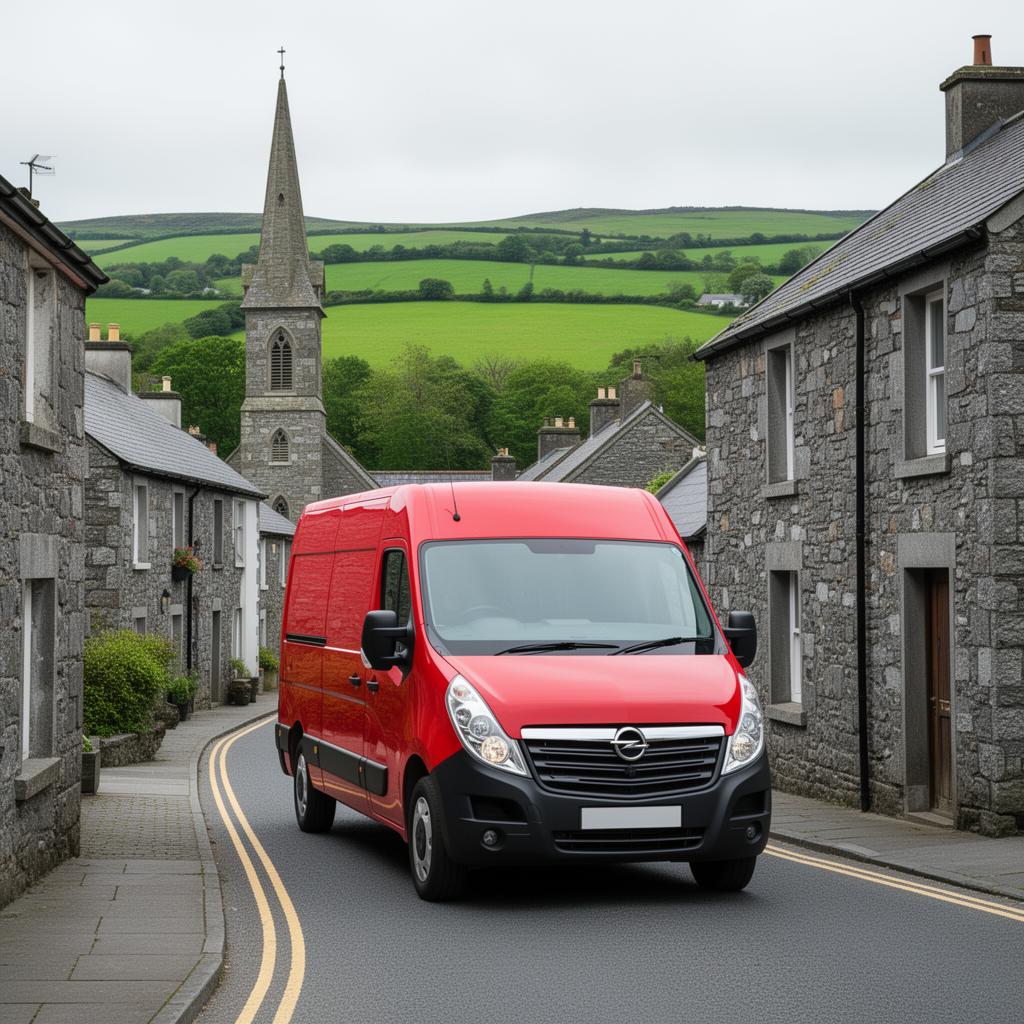
In 2026, the N1L category has matured significantly. The first generation of large electric panel vans — which launched between 2021 and 2023 — carried relatively modest batteries and real-world range figures that made high-mileage fleet operators cautious. The 2025 and 2026 model updates have changed that.
| Model | Battery / WLTP range | DC charge speed | Notes |
|---|---|---|---|
| Renault Master E-Tech N1L | 87 kWh / 459 km | 130 kW (5–80% in 38 min) | Longest WLTP range in the large van segment. Named best large electric van by What Car? 2026. Multiple body styles including Luton. |
| Mercedes eSprinter N1L | 113 kWh / 440 km | 115 kW | Largest battery in class. High payload, multiple wheelbase options. Strong dealer network in Ireland. |
| Ford E-Transit N1L | 68 kWh / 373 km | 115 kW | Dominant in Irish fleet. Multiple configurations — panel van, chassis cab, minibus. Over-the-air updates. Large dealer network. |
| Maxus eDeliver 9 N1L | 72 / 88 kWh / 330–430 km | 90 kW | Competitive pricing. Two battery options. Increasingly popular with delivery fleets in Ireland. |
| Citroën ë-Jumper / Peugeot e-Boxer N1L | 70–100 kWh / 310–420 km | 100 kW | Stellantis large van platform. Also sold as Vauxhall Movano Electric and Fiat e-Ducato. Multiple roof heights and wheelbases. |
The Renault Master E-Tech stands out in 2026 as the long-range leader in the N1L segment — its 87 kWh battery gives it the highest WLTP range of any large electric panel van, and its 130 kW DC charging speed means a depot stop takes around 38 minutes to go from near-empty to 80%. For operators running regional routes with no daytime charging access, the Master E-Tech is the first large electric van that makes the range concern manageable without route restructuring.
The Ford E-Transit continues to dominate Irish fleet procurement in the N1L category, largely because of Ford's established dealer network, the breadth of body style options (panel van, chassis cab, double-cab, minibus), and the fact that fleet operators and leasing companies have been able to get parts and servicing through the same dealers handling their diesel Transits. Fleet familiarity matters for operators managing 10 or 20 vehicles across multiple drivers.
The van grant in Ireland is more than double the car grant — €7,600 for large panel vans — and it has remained unchanged while the car grant has been adjusted multiple times. For Irish businesses running commercial vehicles, it is the most underutilised incentive on the table.
The real cost comparison: electric van versus diesel
The sticker price comparison between an electric van and its diesel equivalent looks unfavourable for electric, even after the grant. A mid-range diesel Ford Transit sells for approximately €38,000–€45,000 depending on specification. A comparably equipped Ford E-Transit, after the €7,600 N1L grant, sits in the €42,000–€50,000 range. The gap is real and it matters for businesses buying outright.
The total cost of ownership over four years tells a different story, particularly for high-mileage operators. Here is an indicative comparison for a large panel van doing 40,000 km per year in Ireland:
| Cost item | Electric (N1L, Ford E-Transit) | Diesel (Ford Transit) |
|---|---|---|
| SEAI grant saving | −€7,600 | None |
| Fuel/charging cost per year (40,000 km) | ~€2,200–€2,800 Depot or home charging, off-peak rates |
~€8,000–€10,000 Diesel at current prices, 10–12 l/100km |
| Motor tax (annual) | €120 | ~€333–€900 Varies by engine, weight |
| Servicing (indicative annual) | Lower — no oil, filter, DPF, AdBlue | Higher — full diesel service schedule |
| 4-year fuel/charging differential | ~€22,000–€29,000 saving for electric at 40,000 km/year | |
At 40,000 km per year — a realistic figure for a busy trades van or delivery vehicle — the four-year fuel saving alone outweighs the purchase price premium in most scenarios. Add the €7,600 grant, motor tax saving, and reduced servicing costs, and the total cost of ownership case for electric is considerably stronger than the sticker price comparison implies.
These are indicative figures — actual fuel and charging costs depend on your charging setup, the rate you pay for electricity, how much of your charging happens at depot versus public rapid chargers, and real-world energy consumption under load. A van operating primarily on motorways at high payload will consume more than one doing urban stop-start delivery work. Use the fleet grant calculator to model the numbers for your specific operation before making a procurement decision.
Calculate your van fleet's total savings
De Energy Hub's fleet grant calculator works through your vehicle mix — cars, vans, and heavy vehicles — and shows the total SEAI grant value, projected fuel savings, and four-year cost comparison. Works for a single van or a fleet of 50.
Calculate your fleet savings →Charging an electric van: depot, home, and public
The charging question is the one that causes the most hesitation among van operators considering the switch. Unlike electric cars — where most drivers charge at home overnight — commercial van operators often have more complex situations: drivers who take the van home, shared yard charging, multiple vehicles competing for limited plugs, or high-mileage routes that make daytime rapid charging a practical necessity.
The honest breakdown for most Irish van operators in 2026:
Depot charging is the cleanest solution for fleets. A 22 kW AC charger at the yard will charge a 68–87 kWh battery overnight from near-empty — most large panel vans go from 20% to 100% in six to eight hours on a 22 kW charger. The depot charger can be shared across multiple vehicles with load management hardware, and the electricity cost per kilometre at commercial rate electricity is typically 75–85% lower than diesel at current pump prices. Note: there is no SEAI workplace charger grant currently available in Ireland — businesses installing depot chargers should investigate the Accelerated Capital Allowance (ACA) via Revenue, which allows the full cost of qualifying EV charger equipment to be written off against tax in year one. Verify ACA eligibility at revenue.ie.
Home charging works for sole traders who take the van home nightly. A 7 kW home charger will charge most N1S vans fully overnight. For N1L large panel vans with 70–113 kWh batteries, a 7 kW home charger will add 50–60 km of range per hour — sufficient for overnight recovery if the van is not returning completely empty. The SEAI Home Charger Grant of €300 is available to the driver directly, provided they have off-street parking and use an SEAI-registered installer with a smart charger from the approved list. Sole traders using a van as their primary commercial vehicle and charging at home can claim this grant on the same basis as a private car owner.
Public rapid charging is improving significantly across Ireland in 2026 — ESB ecars, Ionity, EasyGo and the national charging network are all expanding — but public rapid charging costs more per kWh than overnight charging. For a van operator using rapid chargers regularly, the fuel cost saving over diesel narrows. Build the charging infrastructure case first (depot or home), and treat public rapid charging as a supplement for range extension, not the primary charging plan.
🔌 Charger specifications that matter for vans
AC charging speed: Most N1L vans accept 11 kW or 22 kW AC charging. A 22 kW charger at the depot is significantly faster overnight than a 7 kW unit — for large-battery vans (87–113 kWh), a 7 kW charger may not recover a full working day's range in a single overnight charge if the van returns very depleted.
DC rapid charging: N1S vans typically accept 50–130 kW DC; N1L vans 90–130 kW. The Renault Master E-Tech's 130 kW capability gives the fastest motorway stop — adding approximately 150 km in 20 minutes at a 130 kW charger.
Browse all 24 home and business EV chargers — including depot-suitable 22 kW units — in the De Energy Hub EV charger directory →
Practical questions from Irish van operators
Can a sole trader claim the van grant? Yes — the SEAI Commercial Van Grant is available to businesses and public entities, which includes sole traders operating as a business. The van must be purchased commercially and registered as a commercial vehicle. You will need to provide your business details in the SEAI application.
Does the van need to stay commercial? Unlike the private car grant — where M1 vehicles must remain registered as private for six months after the grant offer — the commercial van grant does not have the same personal use restriction, because N1 vehicles are registered as commercial from the outset. However, the vehicle must be a genuine commercial purchase. Businesses using a van primarily for private transport rather than commercial use should take advice on the correct classification.
Can I get the grant on a leased van? The grant is tied to the purchase of the vehicle — if your leasing company purchases the van and you lease it, the grant accrues to the lessor, not to your business directly. Some leasing companies pass the grant through to the customer in the form of a reduced rental rate; others absorb it into their margin. Clarify this explicitly before signing a lease agreement on a qualifying electric van.
What about second-hand electric vans? The SEAI Commercial Van Grant applies to new vehicles only. The used electric van market in Ireland is growing — Ford E-Transit and Mercedes eSprinter are both appearing at two to three years old with reasonable mileage — but these purchases do not qualify for the grant. The business case for used electric vans rests on running cost savings and capital cost alone, without grant support.
What about VRT? N1 commercial vehicles (vans) are not subject to Vehicle Registration Tax in Ireland. VRT is a car-specific tax — vans are registered under a commercial classification that does not attract VRT at point of registration. This is a separate point from the SEAI grant and applies to both electric and diesel vans equally.
For a sole trader or small business buying a large panel van in Ireland in 2026, the combination of €7,600 grant, €120 annual motor tax, and fuel costs running at roughly 15% of diesel spend changes a procurement question into a fairly clear financial calculation.
How to apply for the SEAI commercial van grant
Confirm the van's N1S or N1L category with your dealer
Before placing an order, confirm the technical category — N1S or N1L — with the dealer. This determines your grant tier. If the van is borderline (some models sit close to the 3,500 kg threshold), ask to see the type approval documentation. The category on the vehicle's Certificate of Conformity is definitive.
Apply for the grant offer through SEAI before the van is registered
Go to seai.ie and complete the business EV grant application. You will need your business details and the vehicle details. SEAI issues a grant offer — this must be in place before the vehicle is registered with the NVDF (National Vehicle and Driver File). Do not wait until the van arrives to start the application.
Register and tax the vehicle within the grant offer validity period
The grant offer is valid for four months from the date of issue, or until 31 December of the current year — whichever is sooner. If your delivery is delayed, contact SEAI before the offer expires. If the offer expires before registration, cancel and reapply — do not assume an expired offer can be extended.
Submit the post-registration confirmation to SEAI
After the van is registered and taxed, submit the registration details to SEAI to trigger the grant payment. SEAI verifies that the registered vehicle matches the grant application — category, make, model, VIN. The grant is then paid directly to your business account.
Claim Accelerated Capital Allowance on charging equipment
If you install a depot charger or home charger as part of the van transition, check whether the equipment qualifies for Accelerated Capital Allowance under Revenue's scheme for energy-efficient equipment. ACA allows the full cost to be written off against tax in year one rather than over a depreciation schedule — a meaningful saving for businesses paying corporation tax or income tax on commercial profits. Verify at revenue.ie or with your accountant.
27 electric vans available in Ireland — where to find them all
The 27 electric vans available in Ireland in 2026 span the full commercial vehicle spectrum — from compact car-derived vans used for urban delivery, through medium panel vans suited to tradespeople, up to large panel vans for logistics and construction, plus chassis-cab and specialist body conversions. Every qualifying model is listed in the De Energy Hub EV directory with full specifications, Irish pricing, grant eligibility, real-world range estimates, and payload and cargo volume data.
🚐 Find your electric van
EV Vehicle Directory — Vans → All 27 electric vans available in Ireland in 2026. Filter by category (N1S / N1L), payload, battery size, and SEAI grant. Every model includes full spec page with Irish pricing, WLTP and real-world range, and grant calculation.
Fleet Grant Calculator → Enter your vehicle mix — vans, cars, and heavy vehicles — and get the full SEAI grant picture plus four-year running cost projection versus diesel.
EV Charger Directory → 24 home and business chargers including depot-rated 22 kW AC units and smart load management models suitable for multi-van yard installations.
Your van can earn while it's parked
De Energy Hub app lets businesses list their EV charger as a bookable hub — open to other drivers when your van is out on the road. Set your own rate, manage bookings from your dashboard, and turn idle charging capacity into revenue. No new hardware required.
Explore De Energy Hub app →
Frequently asked questions
What SEAI grant is available for electric vans in Ireland in 2026?
SEAI offers two commercial van grants for new battery electric N1-category vehicles: €3,800 for N1S vans (technically permissible mass under 3,500kg, list price up to €60,000) and €7,600 for N1L vans (exactly 3,500kg, list price up to €90,000). A grant offer must be issued before the van is registered, and both apply to new vehicles only.
How much is the ZEHDV electric van grant in Ireland in 2026?
There isn't a ZEHDV grant for vans — ZEHDV (Zero Emission Heavy-Duty Vehicles) covers trucks and buses over 3,500kg, with grants of up to €50,000. Vans up to 3,500kg qualify for the separate SEAI Commercial Van Grant instead: €3,800 for N1S or €7,600 for N1L, depending on technical classification.
What electric vans are available in Ireland in 2026?
27 electric vans are available in Ireland in 2026, spanning compact N1S models like the Ford E-Transit Courier and Renault Kangoo E-Tech through to large N1L panel vans like the Renault Master E-Tech, Mercedes eSprinter and Ford E-Transit. The full range with Irish pricing and grant eligibility is in the De Energy Hub EV directory.
Can a sole trader claim the SEAI electric van grant in Ireland?
Yes. The SEAI Commercial Van Grant is open to businesses and sole traders, provided the van is purchased and registered commercially. Sole traders need to supply their business details in the SEAI application, and the vehicle must be a genuine commercial purchase rather than one used mainly for private transport.
What is the difference between N1S and N1L electric van grants in Ireland?
N1S covers vans with a technically permissible maximum mass below 3,500kg and carries a €3,800 grant, capped at a €60,000 list price. N1L covers vans at exactly 3,500kg and carries a €7,600 grant, capped at €90,000. The classification comes from the vehicle's type approval, not its size in the showroom, so it's worth confirming with the dealer before ordering.
How much does it cost to run an electric van in Ireland?
For a large panel van doing 40,000km a year, charging typically costs €2,200–€2,800 annually versus €8,000–€10,000 for diesel fuel, plus €120 motor tax versus €333–€900 for diesel and lower servicing costs with no oil, filters, DPF or AdBlue. Over four years, the fuel and charging saving alone is typically €22,000–€29,000 at that mileage.
What range do electric vans get in Ireland in real-world conditions?
N1S vans typically manage 250–445km WLTP, from the Ford E-Transit Courier's 250km up to the VW ID. Buzz Cargo's 445km. N1L large panel vans range from 280km (Ford E-Transit 470L High Roof) up to 459km (Renault Master E-Tech, which also has the fastest DC charging in the class at 130kW). Real-world range is typically lower than WLTP, especially at high payload or motorway speeds.
Information verified against SEAI.ie and current Irish market data — January 2026. Always confirm grant amounts and eligibility at seai.ie before purchasing.