The appeal of the solar-plus-EV combination is easy to state: solar panels generate electricity for free, an EV consumes electricity, and a smart charger connects the two. In practice it's more nuanced than that — Irish weather is seasonal, electricity tariffs create trade-offs, and the financial case depends heavily on how your car is used. What follows is the honest version of that calculation, grounded in Irish generation figures, Irish electricity rates, and Irish driving patterns.
What actually happens when solar charges an EV
A standard home solar installation generates electricity whenever there is daylight. That electricity flows to whichever appliances are drawing power in the house — the fridge, the boiler, the television. Anything generated above the home's immediate consumption would ordinarily flow out to the grid, earning the Clean Export Premium of €0.185/kWh.

Without a smart EV charger, your car sits in the driveway during the day making no use of that surplus at all. You export the excess solar, earn €0.185 per kWh, and then plug in the car at night on a cheap tariff. That's a reasonable arrangement. But a solar-aware charger changes the dynamic: instead of exporting surplus generation and then buying it back later, you direct it straight into the car's battery while it's sitting idle — for nothing.
The mechanism works like this. A current transformer (CT clamp) attached to your meter measures, in real time, how much electricity your house is importing from or exporting to the grid. The smart charger reads that figure and adjusts its charging rate accordingly. When solar generation exceeds household demand — meaning the meter would otherwise be exporting — the charger directs that surplus into the car. The charging rate rises and falls automatically as clouds pass or household loads switch on. Most solar-aware chargers can modulate down to around 1.4kW (6 amps on a 230V supply), which is the minimum current that will meaningfully charge a standard EV.
⚙️ How solar-mode charging works in practice
Most solar-smart chargers offer two or three operating modes. Solar only (sometimes called Eco mode): the car only charges when there is surplus solar above household demand. Charging stops automatically if generation drops. Solar boost (or Eco+): the car charges from surplus solar, and if more power is needed to reach a minimum charge rate, it draws from the grid to make up the difference. Standard: the car charges at full speed regardless of solar — identical to a conventional charger.
For daytime solar charging, most households use solar-only or solar-boost mode, depending on how urgently the car needs charging. On a strong summer day with a 4 kWp system, solar-only mode will often deliver a full day's commuting range without touching the grid at all.
What an Irish summer day actually generates — the numbers
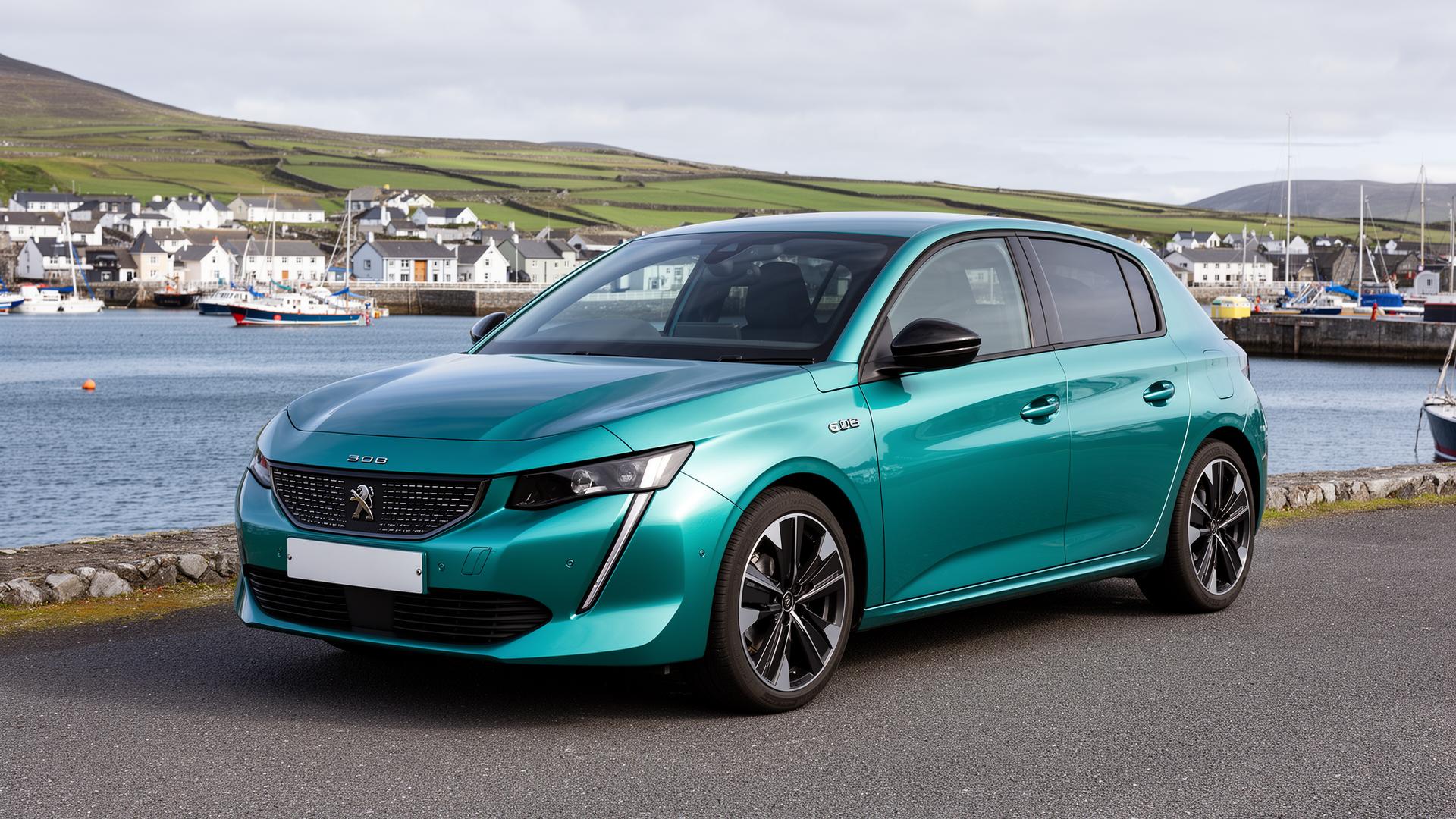
Ireland's solar resource is better than its reputation, but it is seasonal, and the difference between June and December is stark. A south-facing 4 kWp system in Ireland generates approximately 3,400–3,800 kWh annually. The distribution across the year is highly uneven.
| Month | Est. generation — 4 kWp | Good day peak output | EV range from solar (est.) |
|---|---|---|---|
| January | ~140–170 kWh | 8–12 kWh/day | 40–60 km |
| February | ~190–220 kWh | 10–15 kWh/day | 50–75 km |
| March | ~300–360 kWh | 14–20 kWh/day | 70–100 km |
| April | ~380–440 kWh | 16–22 kWh/day | 80–110 km |
| May | ~460–510 kWh | 18–24 kWh/day | 90–120 km |
| June | ~480–540 kWh | 18–26 kWh/day | 90–130 km |
| July | ~460–510 kWh | 17–24 kWh/day | 85–120 km |
| August | ~400–450 kWh | 16–22 kWh/day | 80–110 km |
| September | ~290–340 kWh | 13–18 kWh/day | 65–90 km |
| October | ~190–230 kWh | 9–14 kWh/day | 45–70 km |
| November | ~120–160 kWh | 6–10 kWh/day | 30–50 km |
| December | ~100–130 kWh | 4–8 kWh/day | 20–40 km |
The EV range estimates above assume the surplus solar (after household consumption) flowing into the car — not the system's total generation. A realistic household will consume 1–3 kWh of a solar day's output for appliances before the surplus hits the charger. Range figures use approximately 18 kWh per 100km, which is typical for a mid-size EV in Irish conditions.
The practical takeaway is this: from April through September, a 4 kWp system on a reasonable day will generate enough surplus to cover the average Irish daily commute — which, at around 30–40 km, requires roughly 5.5–7 kWh. From October through February, the surplus is smaller and less predictable. Winter is when night rate charging takes over as the primary method, and the solar contribution becomes a top-up rather than the main event.
From April to September, a 4 kWp solar system on a decent Irish day generates enough surplus to cover an average daily commute — at a marginal cost of zero. Winter is a different story, and anyone who tells you otherwise is selling something.
Solar versus night rate: the honest comparison
This is the question that matters most, and it deserves a straight answer rather than marketing arithmetic. The comparison depends on three things: your electricity tariff, how much of your solar generation you'd otherwise export, and whether your car is typically home during daylight hours.
Here is the genuine trade-off. When a solar-smart charger directs surplus generation into your car rather than exporting it to the grid:
- You save whatever you'd otherwise pay to charge the car — either day rate (€0.38–€0.45/kWh) or night rate (€0.09–€0.13/kWh depending on tariff).
- You give up the Clean Export Premium of €0.185/kWh that you'd have earned on that exported electricity.
The maths that follows from this is important and often glossed over.
| Scenario | Cost per kWh into car | Export income given up | Net benefit per kWh |
|---|---|---|---|
| Solar → car directly (no night rate) | €0.00 | −€0.185 | +€0.215 saving vs day rate (€0.40) |
| Solar → car directly (with night rate) | €0.00 | −€0.185 | −€0.085 vs exporting + night charging |
| Export + night rate charge | €0.10 (night rate) | +€0.185 earned | Net €0.085 profit per kWh into car |
| No solar, day rate | €0.40–€0.45 | — | Baseline — most expensive |
Read that table carefully. If you have a good night rate tariff — Energia, Electric Ireland Smart, or similar — exporting your surplus solar and then charging the car at night is actually slightly cheaper per kWh than directing the solar straight into the car. The export earns €0.185, the night rate costs €0.10; you're net positive by €0.085 per kWh.
So why would anyone use solar-mode charging? Three reasons, and they're all legitimate.
First, not everyone has a night rate tariff. Standard electricity customers paying €0.38–€0.45/kWh during the day benefit significantly from solar charging — they save €0.215 per kWh compared to exporting at €0.185 and buying back at full day rate. Second, the car isn't always plugged in overnight. If your charging behaviour is unreliable — the cable stays in the boot, the car's at work, the socket is already occupied — solar charging during the day means the car is topped up without you having to think about it. Third, there is a genuine resilience argument: if electricity prices rise (and the Clean Export Premium rate is subject to annual review), having your car running on sunshine for six months of the year is an insulation against that.
💡 Who benefits most from solar EV charging
Car is home during the day — works from home, retired, or the household has a second car while one partner commutes. If the car is parked and plugged in during daylight hours, solar charging is automatic.
No night rate tariff — standard electricity customers paying day rate for everything get the biggest financial benefit from solar self-consumption. Switching to a night rate tariff first is worth considering alongside this.
High daily mileage — drivers covering 60–100 km daily need to top up more frequently. A summer day with good solar can deliver that range in surplus electricity at no cost.
Multiple EVs — a household with two electric cars, both parked during the day, can absorb substantially more solar surplus than a single car, making a larger solar system financially worthwhile.
Solar-smart EV chargers available in Ireland
Not all home chargers support solar integration. A standard 7kW wall box charges at full speed regardless of what the solar panels are doing — you'd be drawing from both solar and the grid simultaneously, with no way to prioritise one over the other. Solar-aware charging requires a charger that actively monitors generation and modulates its output.
The category leader in Ireland for solar-integrated home charging is the myenergi Zappi. It reads the CT clamp signal directly, supports three operating modes (Eco, Eco+ and Standard), and can modulate its charging rate from 1.4kW to 7kW based on available surplus. It's compatible with all EV brands, SEAI grant eligible, and has a strong installation base in Ireland. The Zappi is among the most reviewed home chargers in the country for good reason — it's built specifically for the solar use case.
Other chargers in the Irish market with solar-integration capability include the Ohme Home Pro, which offers a solar-boost feature via app-based control, and chargers that integrate with Huawei FusionHome and SolarEdge inverter ecosystems — useful if you already have those inverter brands installed. The myenergi Eddi is sometimes mentioned in this context, but it's a solar diverter for hot water — not an EV charger. Do not confuse the two.
Compare 24 home EV chargers — solar-compatible models flagged
De Energy Hub's EV charger directory lists every home charger available in Ireland with solar-integration capability clearly marked, alongside SEAI grant eligibility, pricing, and installer guidance.
Browse the charger directory →The SEAI grant of €300 is available for home EV charger installation and applies to solar-smart chargers just as it does to standard models. The charger must be installed by an SEAI-registered contractor. The grant covers the charger and installation cost — it is paid to the installer who deducts it from your invoice, so you pay the net amount directly. Verify current eligibility requirements at seai.ie before purchasing.
Sizing solar for an EV household — you need more panels than you think
An EV is the largest flexible electrical load most households will ever own. A 60 kWh battery charged from empty adds 60 kWh of consumption per full charge, and a typical EV driver charging two to three times a week adds 6,000–10,000 kWh annually to the household electricity bill. That is roughly equivalent to adding another entire average Irish household's consumption on top of your existing one.
This has significant implications for solar sizing. A homeowner without an EV who buys a 3 kWp system might cover 40–50% of their electricity with solar in a typical year. Add an EV into the same calculation and that coverage drops considerably — you have the same generation, but much higher total demand.
| Household profile | Annual electricity use | Recommended solar | Est. solar coverage |
|---|---|---|---|
| 2-person home, no EV | ~3,000 kWh | 2–3 kWp | ~55–75% |
| Family home, no EV | ~4,500–5,000 kWh | 3–4 kWp | ~50–65% |
| Family home, 1 EV (avg. mileage) | ~7,000–8,500 kWh | 4–6 kWp | ~40–55% |
| Family home, 2 EVs | ~9,000–12,000 kWh | 6 kWp | ~35–45% |
| High-mileage EV + heat pump | ~10,000–14,000 kWh | 6 kWp (+ battery) | ~30–40% |
A solar system for an EV household should be sized for the EV, not sized as though the EV doesn't exist. The SEAI Solar PV grant caps at €1,800 (for a 2 kWp or larger system) regardless of total system size — so there's no grant incentive to install a smaller system than your consumption warrants. If you're buying solar with an EV in mind, 4 kWp is the realistic minimum; 6 kWp gives you meaningful generation headroom for summer solar charging.
The smart diverter versus the smart charger — they're not the same thing
A solar diverter (the myenergi Eddi, the Solar iBoost+, the Solic 200) takes surplus solar and sends it to a resistive load — almost always a hot water immersion element. It is not an EV charger. It cannot charge a car. What it can do is eliminate one large electricity purchase (hot water heating) from your bill, freeing up more of your generation budget for EV charging at night. For a household with solar, an immersion diverter, and a night rate tariff, the combination of "hot water for free in the day + car for cheap at night" is actually a very efficient stack — no solar charger required.
The choice between this approach and a solar-smart EV charger depends on your priorities. Hot water is consumed every day regardless of season. EV charging is more flexible. If you only have budget for one solar-aware device, an immersion diverter might deliver more year-round value — particularly through autumn and spring when solar EV charging is marginal. That said, the two are not mutually exclusive, and a properly configured system can run both.
🔋 Solar diverters available in Ireland
The myenergi Eddi, Solar iBoost+ and Solic 200 are the three most installed solar immersion diverters in Ireland. All three divert surplus solar to a hot water cylinder rather than exporting it — effectively giving you free hot water on sunny days. They work alongside (not instead of) a solar EV charger. De Energy Hub's smart energy management directory covers all three, with Irish pricing and compatibility notes.
Does a home battery change the EV charging equation?
A home battery changes one thing significantly: it decouples when your solar generates from when your car needs charging. Without a battery, solar EV charging requires the car to be home and plugged in while the sun is shining — which suits work-from-home households but not everyone. A battery stores daytime generation and makes it available at 7pm or 10pm when the car arrives back in the driveway.
The financial case for adding a battery specifically for EV charging is less clear than it might seem. A 10 kWh battery costs €3,500–€6,000 installed. If you're primarily using it to shift solar generation from daytime to evening EV charging, the value per kWh shifted is the difference between the export rate (€0.185) and the night rate you'd otherwise pay (€0.10) — roughly €0.085 per kWh. To justify a €4,000 battery on EV charging alone, you'd need to shift approximately 47,000 kWh through it — which at 2,000–3,000 kWh of EV-relevant shifting per year would take 15–25 years. The battery's warranty is typically ten years.
Batteries make more sense when the household has high daytime solar generation, poor overnight export rates, and uses the battery for household consumption generally — not just for the EV. If you're planning solar and seriously considering a battery, the solar battery directory lists 15 home battery systems with Irish pricing, usable capacity, cycle life, and inverter compatibility — including which models integrate with EV charger systems for automated home energy management.
A home battery doesn't make solar EV charging possible — the smart charger does that. What a battery does is make it possible when the car isn't home during the day. That's a different question, with different economics.
If you already have solar and are buying an EV
The most common situation De Energy Hub hears about: a homeowner who installed solar two or three years ago, now buying their first EV, and wondering whether they need a new charger or whether the existing system can handle it.
Two questions matter here. First, does your existing home charger (if you have one) support solar integration? A standard 7kW charger installed before 2023 almost certainly does not. It will charge the car at full speed regardless of what the solar is doing. Replacing it with a solar-aware charger requires a new charger purchase (€700–€1,100 for the charger, plus installation), though the SEAI €300 grant still applies if you haven't claimed it previously.
Second, is your solar system sized to handle an EV? A 2–3 kWp system that was right-sized for your home before the EV may now be undersized. Getting a quote for a system expansion is worth doing — additional panels can often be added to an existing inverter up to its rated capacity, and the marginal cost of extra panels is lower than the cost of a full new installation.
If you have an EV and are buying solar for the first time
Size the solar system for the EV, not around it. Use your actual electricity consumption from last year's bill — including EV charging — as the baseline figure, then size the system to cover 50–70% of that total. A 4–6 kWp system is the right range for most Irish EV households. Pair it with a solar-smart charger from the outset — there is no reason to install a standard charger if solar is already part of the plan.
The application sequence for the SEAI Solar PV grant is non-negotiable: apply and receive a Letter of Offer before any installation begins. The EV charger SEAI grant is applied through your charger installer separately — the two grants are claimed independently, and there is no conflict in claiming both.
See what home charging actually costs you — and how solar changes it
De Energy Hub's EV home charging calculator works out your cost per km across different charging methods — standard rate, night rate, solar, and solar boost — for your specific electricity tariff and driving pattern.
Open the charging calculator →Putting the whole system together
The most complete version of this setup — solar panels, solar-smart EV charger, solar immersion diverter, and optionally a home battery — operates as a single unit when connected through a home energy management system (HEMS) or a compatible inverter ecosystem. The HEMS monitors generation, household consumption, battery state, EV charge level, and hot water temperature, and automatically allocates solar generation in priority order: household consumption first, then hot water diversion, then EV charging, then battery, then export.
In a well-configured system, a June day in Ireland looks something like this. By 10am, generation exceeds household load and the immersion is heating the water tank. By 11am, the car is plugged in and the smart charger kicks in, adding 10–15 kWh through the afternoon at zero cost. By 6pm, the car has 60–80 km of free range added, the water is hot, and the house hasn't drawn from the grid since morning. On a good June day in Ireland, that scenario is not aspirational — it is routine for properly configured systems.
🌿 De Energy Hub directories for the full solar + EV system
Solar Panel Directory → 13 panels — PERC, TOPCon, HJT and IBC technologies, efficiency ratings, and Irish availability.
Solar Inverter Directory → 15 inverters including hybrid models with integrated battery and EV charger management.
EV Charger Directory → 24 home and business chargers — solar-compatible models clearly flagged, SEAI €300 grant eligibility confirmed.
Smart Energy Management Directory → 15 HEMS controllers and solar diverters — connect solar, battery, heat pump and EV charger into one automated system.
Solar Battery Directory → 15 home batteries — LFP and NMC chemistries, usable capacity, cycle life and inverter compatibility.
The combination of solar and EV charging is not a gimmick and it's not a magic solution. It's a genuine opportunity to reduce fuel costs to near zero for six months of the year, with a smart charger and the right tariff structure doing the rest of the work. For most Irish EV households with a suitable roof, it makes sense. The question is which configuration makes sense for your car, your home, and your driving pattern — and that's what the calculator is there to help you work out.
Find EV charging near you — or turn your solar charger into a 24/7 asset
De Energy Hub app connects EV drivers to bookable charging hubs. Hosts set their energy rate — Pure Solar, Smart, or Boost — and manage availability from a single dashboard. No new hardware. Live in under an hour.
Explore De Energy Hub app →
Frequently asked questions
Can I charge my electric car with solar panels in Ireland?
Yes. A solar-smart EV charger reads your solar system's surplus generation in real time and automatically routes it into your car's battery rather than exporting it to the grid. From April through September, a 4kWp south-facing system typically generates enough surplus to cover the average Irish daily commute — around 30–40km requiring 5.5–7kWh — at zero marginal cost. Winter solar is more limited and most EV owners combine solar charging in summer with a night rate tariff through the colder months.
What is the best solar EV charger available in Ireland?
The myenergi Zappi is the category leader in Ireland for solar-integrated home EV charging. It reads the CT clamp signal from your solar inverter in real time, supports three operating modes (Eco, Eco+ and Standard), and automatically modulates charging between 1.4kW and 7kW based on available surplus. It is SEAI grant eligible and widely installed across Ireland. The Ohme Home Pro also offers solar-boost functionality via app-based control.
Is solar charging or a night rate tariff cheaper for an EV in Ireland?
It depends on your setup. If you have a good night rate tariff (€0.09–€0.13/kWh), exporting surplus solar at €0.185/kWh and charging the car overnight is marginally cheaper per kWh than directing solar straight into the car. However, solar charging significantly beats the standard day rate (€0.38–€0.45/kWh). Solar charging is most valuable when your car is home during daylight hours, you have no night rate tariff, or overnight charging is unreliable.
What size solar system do I need to charge an EV in Ireland?
A family home with one EV needs a minimum of 4kWp to meaningfully cover both household loads and EV charging. A typical Irish EV adds approximately 2,700–3,600kWh of annual consumption — a 50–80% increase on an average household bill. Size the system using your actual electricity consumption including EV charging as the baseline. 6kWp is recommended for households with an EV, heat pump, or two cars.
Does the SEAI grant apply to solar EV chargers in Ireland?
Yes. The SEAI Home Charger Grant of €300 applies to solar-smart chargers including the myenergi Zappi, on the same terms as standard chargers. The charger must be installed by a Safe Electric Ireland registered contractor. The SEAI Solar PV Grant (€900 per kWp, up to €1,800 for a 2kWp or larger system) covers the solar panels separately. Both grants can be claimed on the same project — they are independent applications.
Do I need a home battery to charge my EV with solar in Ireland?
No. A solar-smart EV charger alone is sufficient — the car acts as the storage device, absorbing surplus generation while parked and plugged in during daylight. A home battery becomes useful if you want to store daytime solar for evening EV charging when the car isn't home during the day, but the payback period for a battery used primarily for EV charging is typically 15+ years at current prices. Most EV households use solar-mode charging during the day and a night rate tariff for evening top-ups.
How much free range can I get from solar EV charging in Ireland?
On a good May or June day, a 4kWp solar system with a smart charger can deliver 10–20kWh of surplus generation into a car — equivalent to 55–110km of free range for a mid-size EV using approximately 18kWh per 100km. In January or December, the same system may only produce 4–8kWh on a good day, limiting free solar range to 20–45km. The April-to-September period is where solar EV charging delivers most of its annual value in Ireland.
Information verified against SEAI.ie and current Irish market data — April 2026. Always confirm grant amounts and eligibility at seai.ie before purchasing.