⚡ Budget 2027 at a glance
EV VRT relief: extended to 31 December 2028, worth up to €5,000 on a qualifying new battery electric car.
VRT rates: up one percentage point in bands 3 to 20 (above 80g/km CO2) from 1 January 2027. Pure EVs are not in those bands.
Company car BIK for EVs: no change announced. The existing schedule continues.
SEAI car and home charger grants: no change reported in the coverage we checked.
Fuel: excise cuts extended to 28 February 2027, with petrol and diesel carbon tax held until 1 May 2027.
Solar export income: the tax-free limit rises from €400 to €600 a year. The Finance Bill will set the start date.
Heating fuels: carbon tax on kerosene and natural gas cut to €48.50 per tonne.
SEAI package (29 September, not the Budget itself): €600 home battery grant, solar grant now open to homes built before 2025, €2,000 boiler scrappage grant, and 45% grant aid for business solar and heat pumps.
The VRT relief now runs to 31 December 2028
This is the headline for anyone buying a new EV. The Vehicle Registration Tax relief for battery electric vehicles was due to end on 31 December 2026, which created a real deadline for buyers. The Budget extends it by two years, to 31 December 2028. The relief is worth up to €5,000 and is applied at first registration.
The structure that applies today is based on the car's Open Market Selling Price (OMSP), which is Revenue's own valuation at registration rather than the sticker price. Full relief applies up to an OMSP of €40,000, it tapers between €40,000 and €50,000, and no relief applies above €50,000. The Budget coverage we checked reported no change to those points, but the Finance Bill is where the detail will be confirmed, so check Revenue before you rely on a specific figure.
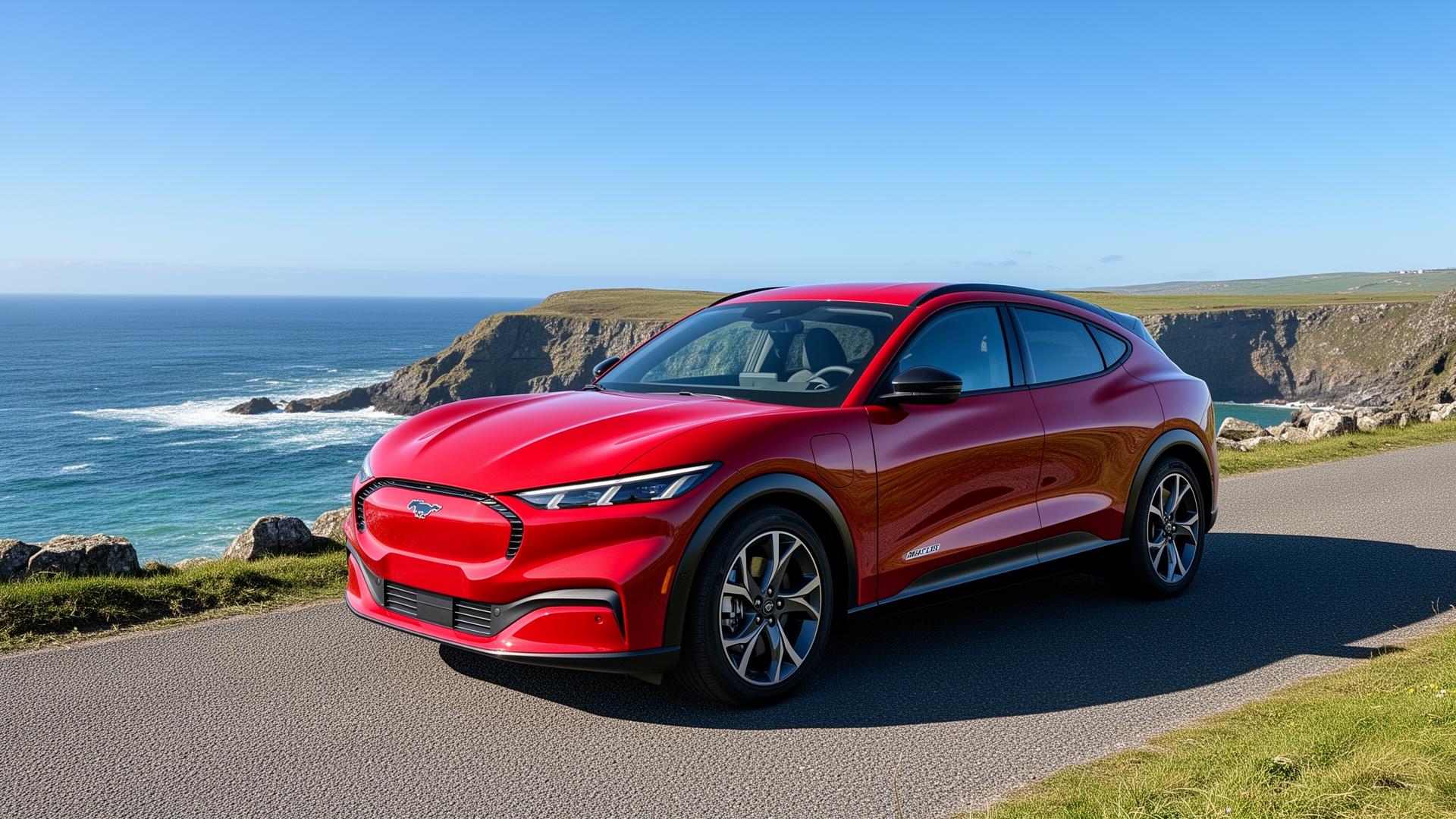
The practical change is on timing. Anyone who was considering ordering in a hurry to register before the end of 2026 can now plan the purchase around their own needs. It is still worth confirming the OMSP of the exact car and trim you want, because a car close to the €40,000 or €50,000 points can land in a different relief band from a similar one a little cheaper.
VRT rises by 1% on higher-emission cars
From 1 January 2027, VRT rates rise by one percentage point in bands 3 to 20, which covers cars with CO2 emissions above 80g/km. A battery electric car has no tailpipe CO2, so it is not in those bands and this increase does not apply to it directly.
The effect is indirect. Petrol and diesel cars become a little dearer to register, which narrows the price gap to an EV. Motoring press estimates put the rise at roughly €300 to €500 on popular new cars, but those are estimates, not official figures. Treat them as a rough guide and ask a dealer for the registered price of the specific car.
Company car BIK for EVs: unchanged
KPMG Ireland's Budget 2027 summary is clear on this one: no change was announced to the benefit-in-kind calculation. That means the existing schedule carries on, and it is a steep one. The temporary reduction applied to a car's original market value falls to €5,000 from 1 January 2027 and €2,500 in 2028, and it is due to end in 2029.

Together with the EV-specific reduction, our company car guide sets out the combined effect: the total reduction falls from €30,000 in 2026 to €15,000 in 2027. That halves the reduction in a single step, so a car placed with an employee in January 2027 has a noticeably higher taxable base than the same car placed in 2026. The Budget did not soften that, so fleet managers and employees choosing a car should still model 2026 and 2027 delivery separately.
⚠️ The VRT extension does not change the BIK cliff
VRT relief and BIK are separate measures. Extending the VRT relief to 2028 lowers the price of a new EV, but it does nothing to the BIK reduction that steps down on 1 January 2027. Do not assume the Budget makes 2027 company car delivery as favourable as 2026.
Our company car BIK guide has the full table, and workplace EV charging and BIK for employers covers the separate exemption for charging at work.
SEAI grants: no change reported, 2027 level not confirmed
None of the Budget 2027 coverage we checked reports a change to the SEAI grants for private EV buyers, and none confirms their level for 2027 either. Citizens Information currently lists the grant for a new, privately bought battery electric car at up to €3,500, for cars with a full price up to €50,000. The plug-in hybrid grant has been removed. The Home Charger Grant is listed at up to €300.
Before you order a car or a charger, confirm the current amount and the price cap at seai.ie. Our guides to SEAI grants and stacking grants explain how the pieces fit together, and the Home Charger Grant guide covers the claim process.
Fuel and carbon tax
The running-cost side of the comparison also moved, mostly by postponement rather than by increase:
- Petrol and diesel excise: the temporary cuts are extended to 28 February 2027, then restored in four phases, with full restoration by 30 June 2027.
- Carbon tax on petrol and diesel: held at €71 per tonne of CO2 until 1 May 2027, when it rises to €78.50 per tonne, according to Citizens Information.
For a driver on the fence, that means the fuel price advantage of staying with petrol or diesel is being unwound through 2027. To put your own numbers on it, try the EV charging cost calculator.
Solar panels and home batteries
Two separate things happened in the same week, and it helps to keep them apart. The Budget itself raised the income tax exemption for money you earn selling surplus solar electricity back to the grid, from €400 to €600 a year, according to KPMG Ireland's summary. The start date and the legal detail are for the Finance Bill, so treat the timing as provisional.
The grant changes came from SEAI, in a package announced on 29 September 2026 and opening from 6 October 2026, subject to final implementation arrangements:
- Home battery grant: a new grant of €600 for a home battery energy storage system. It covers a battery of 5 kWh or more in a home built before 2025, installed alone or with solar, with a combined maximum of €2,400 alongside the solar grant. Check the conditions at seai.ie before you order.
- Solar PV grant: the existing grant of up to €1,800 is extended to houses built and occupied before 2025, instead of before 2021.
If you already have an EV, solar and a battery are a natural pairing: daytime generation can charge the car, and the battery covers the evening. Our solar panels guide and EV and solar charging guide walk through the sums, and the solar battery directory and solar panel directory list the products with Irish pricing.
Heat pumps and heating costs
The Budget itself did not change heat pump grants, but SEAI's separate package raised the grant to up to €14,500 for a house from 6 October 2026 (€10,500 for the unit, €2,000 for a heating upgrade and €2,000 boiler scrappage), and to €11,500 for an apartment. Two other changes matter if you are weighing a heat pump against an oil or gas boiler:
- Carbon tax on heating fuels: the rate on kerosene and natural gas falls from €63.50 to €48.50 per tonne of CO2 and is due to stay there for the lifetime of the Government. That lowers the running cost of an oil or gas boiler a little, so the saving from switching depends more on your own usage and electricity tariff.
- Boiler scrappage grant: SEAI's package includes a €2,000 grant for replacing a fossil fuel heating system in a house built before 2021. Homeowners with a heat pump application already in progress receive it automatically. SEAI says the full terms are to follow.
Our heat pump guide explains how the grant bundle works, and the heat pump directory and hot water cylinder directory cover the equipment. For controlling it all together, see smart energy management.
For businesses: solar, heat pumps and capital allowances
SEAI's package also lifts business support for a limited period:
- Non-Domestic Microgeneration Grant: grant aid has been temporarily increased from about 23% to 45% of eligible costs, with the per-kW rates temporarily doubled, for applications from 6 October 2026 to 6 July 2027.
- Business Energy Upgrades Scheme: grant aid for heat pumps and solar thermal rises to 45% of eligible costs.
The Accelerated Capital Allowance, which lets a business write off the cost of qualifying energy-efficient equipment in year one, was extended to 31 December 2030 in Budget 2026. None of the Budget 2027 coverage we checked reports a change to it. Because the 45% rate is temporary, a business planning solar should not leave the decision open-ended. Use the business solar calculator to model your site, and note that the grant is only one part of the saving.
The Budget also allocated €654.5 million to SEAI residential and community energy upgrade schemes. Confirm the current rules at seai.ie before you commit, because the package is new and the detailed terms are still being published.
What your grants add up to from 6 October
Put the pieces together and a home can now claim more than before, but only if every eligibility rule is met. Almost all of this comes from SEAI's package, not from the Budget itself. The Budget's own contribution to a home energy project is on the tax side: the higher solar export income limit and the lower carbon tax on oil and gas.
| What you install | Grant from 6 October 2026 | Rules to check |
|---|---|---|
| Solar panels (4 kWp or more) | Up to €1,800 | Home built and occupied before 2025. Apply before work starts. |
| Home battery (5 kWh or more) | €600, or up to €2,400 combined with solar | Home built before 2025. Can be claimed with solar in one application, or on its own. |
| Heat pump in a house | Up to €14,500 | Includes up to €2,000 boiler scrappage. Home built before 2021. |
| Heat pump in an apartment, or air-to-air | Up to €11,500 (apartment), up to €9,500 (air-to-air) | Home built before 2021. A grant cannot exceed the cost of the works. |
| EV home charger | Up to €300 | No change reported in the Budget. Apply before buying or installing. |
| Heat pump, solar, battery and charger together | Up to €17,200 | €14,500 + €1,800 + €600 + €300. Only for a qualifying house, and only if each rule is met. |
Two details catch people out. The solar and battery grants now run to homes built before 2025, but the heat pump grants still apply only to homes built before 2021, so a house built in 2022 can claim solar and a battery but not the heat pump grants. And every grant needs a Letter of Offer from SEAI before work begins. Our grant stacking guide explains how to sequence the applications; use the amounts on this page as the current ones.
What it means for you
| If you are... | What the Budget changes | What to do |
|---|---|---|
| Buying a new EV privately | VRT relief runs to 31 December 2028. SEAI grant not reported as changed. | Plan the purchase at your own pace. Check the car's OMSP and the SEAI grant at seai.ie. |
| Choosing a company car | Nothing on BIK. The reduction still steps down on 1 January 2027. | Model 2026 and 2027 delivery separately with the BIK calculator. |
| Running a fleet | No change to the BIK schedule. VRT relief extended. | Re-run the fleet numbers for 2027 and 2028 purchases. |
| Planning a home charger | No change reported to the Home Charger Grant. | Confirm the terms at seai.ie, apply before any work starts. |
| Adding solar or a battery at home | New €600 battery grant. Solar grant open to homes built before 2025. Export income limit rises to €600. | Check SEAI's terms, then compare products in the solar and battery directories. |
| Replacing an oil or gas boiler | SEAI heat pump grant up to €14,500 for a house, including €2,000 scrappage (SEAI package, not the Budget). Carbon tax on heating fuels cut. | Model running costs both ways and confirm your home qualifies with SEAI. |
| Running a business | 45% grant aid for business solar and heat pumps for a limited period. No ACA change reported. | Use the business solar calculator now, while the higher rate applies. |
| Still on petrol or diesel | VRT up 1% from January. Fuel tax cuts unwind through 2027. | Compare running costs with the charging cost calculator. |
Run the 2027 numbers for your company car
The BIK calculator works out the notional pay and tax cost for a company EV, so you can compare 2026 and 2027 delivery side by side. Fleet owners can use the fleet grant calculator for cars, vans and heavy vehicles.
Open the BIK calculator →What is still to be confirmed
A Budget speech sets the direction and the Finance Bill sets the law. These are the points we are watching for:
- The exact OMSP thresholds and taper for the extended VRT relief.
- The level of the SEAI private car grant and its price cap for 2027, and whether the ICE2EV scrappage scheme continues.
- The start date and mechanics of the VRT rate increase.
- The start date for the higher solar export income limit, and the Energy Affordability Action Plan the Government says will follow the Budget.
We will update this guide when those are confirmed. Until then, treat any figure for 2027 that is not in the Finance Bill as provisional.

Charging away from home also gets easier to plan around a booking. See how drivers book their first charge in De Energy Hub app, or, if you have a charger or a car park, how to earn from it as a host.
Frequently asked questions
Was the EV VRT relief extended in Budget 2027?
Yes. Budget 2027, announced on 6 October 2026, extends the Vehicle Registration Tax relief for electric vehicles by two years, to 31 December 2028. It had been due to end on 31 December 2026. The relief is worth up to €5,000 on a qualifying new battery electric car.
How much is the VRT relief on an electric car?
Up to €5,000. Under the existing structure, full relief applies to a car with an Open Market Selling Price (OMSP) up to €40,000, it tapers between €40,000 and €50,000, and no relief applies above €50,000. The Budget coverage we checked reported no change to those points, but the Finance Bill will set out the detail.
Does the 1% VRT increase affect electric cars?
Not directly. VRT rates rise by one percentage point in bands 3 to 20, which covers cars with CO2 emissions above 80g/km, from 1 January 2027. A battery electric car emits no tailpipe CO2, so it is not in those bands. The change makes higher-emission petrol and diesel cars dearer to register, which narrows the price gap to an EV.
Did Budget 2027 change company car BIK for electric vehicles?
No. KPMG Ireland's Budget 2027 summary states that no change was announced to the benefit-in-kind calculation. The existing schedule continues: the temporary reduction applied to a car's original market value falls to €5,000 from 1 January 2027 and €2,500 in 2028, and is due to end in 2029.
Is the SEAI electric car grant still €3,500?
Citizens Information currently lists the SEAI grant for a new privately bought battery electric car at up to €3,500, for cars with a full price up to €50,000. None of the Budget 2027 coverage we checked reported a change to it, and none confirmed its level for 2027 either, so check seai.ie before you order.
Did the Budget change the SEAI home charger grant?
None of the Budget 2027 coverage we checked mentions a change to the SEAI Home Charger Grant, which Citizens Information lists at up to €300 towards installing a home charger. Confirm the current terms on seai.ie before you commit to an installation.
What happens to petrol and diesel prices after Budget 2027?
The temporary cuts to petrol and diesel excise are extended to 28 February 2027, then restored in phases, with full restoration by 30 June 2027. The carbon tax on petrol and diesel stays at €71 per tonne of CO2 until 1 May 2027, when it rises to €78.50 per tonne, according to Citizens Information.
Where can I check the official Budget 2027 figures?
The Department of Finance and Revenue publish the official measures, and the detail of the VRT and tax changes will be legislated in the Finance Bill. For EV grants, check seai.ie. Always confirm the figures that apply to your purchase before you commit.
Is there a home battery grant in Ireland?
Yes. SEAI announced a new grant of €600 for a home battery energy storage system on 29 September 2026, opening from 6 October 2026 subject to final implementation arrangements. It came from SEAI's package rather than the Budget itself. It covers a battery of 5 kWh or more in a home built before 2025, installed alone or with solar, and the maximum combined with the solar grant is €2,400. Check the conditions at seai.ie before you order.
Did Budget 2027 change the heat pump grant or heating costs?
The Budget itself did not change heat pump grants, but SEAI's separate package raised the grant to up to €14,500 for a house (€10,500 for the unit, €2,000 for a heating upgrade and €2,000 boiler scrappage) and €11,500 for an apartment, for new applications from 6 October 2026. Carbon tax on kerosene and natural gas was also cut from €63.50 to €48.50 per tonne.
Last verified 11 October 2026 against published coverage of the Budget 2027 statement of 6 October 2026, including KPMG Ireland, PwC Ireland, Citizens Information and the Irish Times, against Citizens Information's electric vehicle grants page for the SEAI car and charger amounts, and against SEAI's announcement of 29 September 2026 for the battery, solar, scrappage and business grant changes. Where sources did not report a figure, we say so rather than assume it. This is general information, not tax or financial advice. Confirm the figures that apply to you with Revenue, SEAI or a tax adviser before you commit to a purchase.